
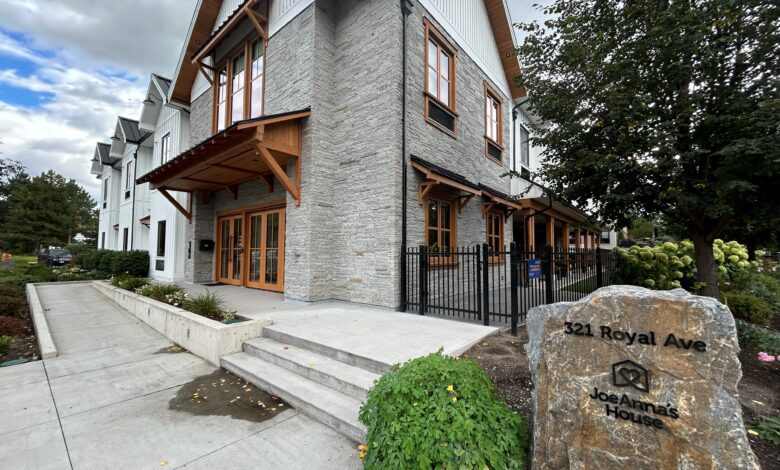
JoeAnna’s House in Kelowna moved to accelerate an expansion after sustained demand filled its 20 guest rooms and forced it to turn away families of patients receiving care at Kelowna General Hospital. The plan would add ten rooms, increasing overnight capacity by 50 per cent.
The house serves people far from home
Families from across British Columbia’s Interior may travel hours when a relative needs specialized or emergency treatment in Kelowna. A hotel bill, daily transport and separation from a patient’s care team can add financial and emotional strain to an already difficult period.
JoeAnna’s House provides accommodation close to the hospital so eligible relatives can remain nearby. It is operated through the KGH Foundation and relies heavily on community donations rather than functioning as an ordinary commercial hotel.
Twenty rooms were no longer enough
By October 2024, director Darlene Haslock said the facility had been effectively full for the previous nine months. Staff regularly had to tell families that no room was available.
A full-house figure is not merely a measure of popularity. It means some people must find a more expensive alternative, travel back and forth, rely on informal support or remain farther from a hospitalized loved one.
The proposal added ten guest rooms
The fast-tracked plan called for an extension that would increase capacity from 20 rooms to 30. Existing shared kitchens, lounges and support spaces made expansion on the established site more practical than creating an entirely separate service.
Ten rooms cannot eliminate every wait, especially during periods of hospital pressure. They can nonetheless accommodate many additional stays over a year and give staff more flexibility when treatment extends unexpectedly.
Demand reflected the hospital’s regional role
Kelowna General Hospital provides services used by patients from communities spread across a large geographic area. Centralizing specialized care can improve clinical expertise, but it transfers travel and lodging burdens to rural and remote families.
Family accommodation is therefore part of access to care even though it is outside the treatment room. A bed near the hospital helps relatives attend consultations, make decisions and support recovery.
Fundraising and construction required care
An expansion must cover design, approvals, building costs and long-term operations. Opening rooms without sustainable staffing, maintenance and utilities would create capacity that could not reliably be used.
The KGH Foundation advanced a $5.3-million fundraising campaign, and work eventually reached a ceremonial groundbreaking in September 2025. By then, the foundation said more than 1,300 families had been turned away because the house was full.
Those figures need interpretation
A turn-away count records unmet requests, not necessarily unique households or patients without any accommodation. Families may find another option, postpone arrival or contact the house more than once.
Even with that limitation, the repeated inability to offer a room is strong operational evidence that existing capacity was insufficient. Transparent reporting should continue to distinguish requests, households, occupied nights and length of stay.
Expansion is only one part of the solution
Health authorities can also reduce travel through appropriate local services, patient-transfer coordination and virtual follow-up. Municipalities and hospitals can improve transport and make information about lodging support easier to find.
None of those measures removes the need for in-person tertiary care. When travel is unavoidable, accommodation close to the hospital protects families from bearing the entire geography penalty themselves.
The project links charity with health access
JoeAnna’s House was built through philanthropy, but its capacity problem revealed a structural need. Families are part of the care environment, and their ability to stay nearby affects communication, stress and practical support.
The 2024 decision to move faster was therefore more than a building update. It was a response to months of full occupancy and documented unmet demand. The eventual expansion will need measured results, sustainable operating funds and fair access, but ten additional rooms represent a concrete improvement for people whose medical crisis begins far from Kelowna.



