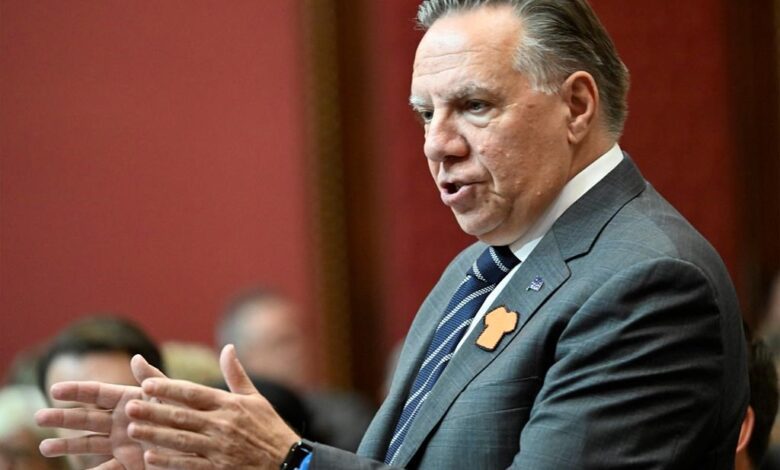
Quebec Premier François Legault called in October 2024 for Ottawa to relocate half of the asylum claimants then living in Quebec to other provinces, including through compulsory transfers. The federal government supported a fairer distribution but rejected forcing people already in Canada to move.
Quebec cited a disproportionate share
Legault said Quebec was supporting about 45 per cent of Canada’s asylum seekers despite holding roughly 22 per cent of the national population. The 45-per-cent figure corresponded to claims made in Quebec in 2023, when 143,000 claims were recorded nationally.
Later federal data showed the share changing during 2024. Through September, Quebec received about 34 per cent of new claimants, and estimates that accounted for people moving between provinces put its share lower.
Arrival location is not permanent residence
An asylum claim may be filed at an airport or border point in Quebec even when the person later moves elsewhere. Conversely, someone who claims in another province may choose Quebec because of language, family or services.
Statistics based on claims, last-known address, shelter use and work permits answer different questions. Policy arguments should specify which measure they use.
The province faced real service pressure
Rapid arrivals increased demand for temporary housing, schools, income assistance, legal services and health care. Montréal shelters and community organizations reported difficulty finding affordable accommodation.
Quebec asked Ottawa to reimburse exceptional costs and change visa and asylum processing. The federal government committed $750 million in 2024 in recognition of asylum-related services, including temporary housing.
Voluntary relocation was already possible
Immigration, Refugees and Citizenship Canada had transferred claimants who agreed to move from Quebec to accommodation in Ontario, Atlantic Canada and British Columbia. Federal records later put voluntary transfers from Quebec since mid-2022 at more than 10,000.
A voluntary programme can offer housing, work-permit support and settlement connections while respecting personal choice. Its success depends on real capacity and informed consent in the receiving community.
Compulsion raised legal and practical concerns
People physically present in Canada generally have mobility and liberty interests, and asylum claimants retain legal rights while their cases are decided. Forcing a person to live in a province without a clear lawful basis would invite constitutional challenge.
It could also separate families, lawyers, medical care and language networks. A transfer that ignores those ties may shift administrative cost without helping the claimant become stable.
Other provinces could not simply be assigned capacity
Housing shortages and strained shelters also affected Ontario and other regions. A population-based formula might appear equitable, but it would need provincial cooperation, funding and an assessment of available homes and services.
Moving people to a place with no accommodation or employment would not solve the underlying problem. Federal coordination should match volunteers with communities able and willing to support them.
Claimants and resettled refugees are distinct
An asylum claimant asks Canada for protection after arrival and awaits an eligibility and refugee determination. A government-assisted or privately sponsored refugee normally enters through a different resettlement process.
Calling every claimant a confirmed refugee prejudges the legal decision; describing them as illegal ignores their right to make a claim. Accurate terminology protects a debate already vulnerable to misinformation.
Fair distribution requires shared responsibility
Quebec’s complaint identified a genuine imbalance and financial burden, particularly based on the 2023 arrivals. The proposed compulsory remedy was a separate proposition and was neither accepted nor implemented by Ottawa.
A durable response combines faster fair decisions, work authorization, housing funds and voluntary movement supported by receiving provinces. It should also protect appeal and due-process rights. The aim is not merely to improve a percentage on a provincial chart, but to manage national responsibility without treating people seeking protection as freight to be reassigned.