
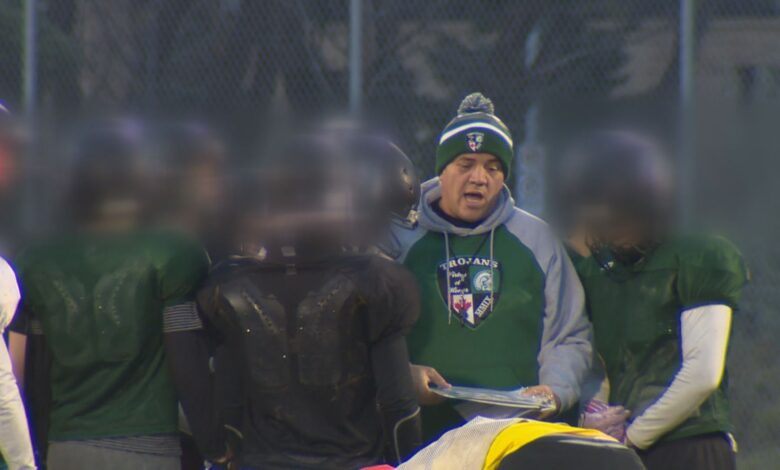
A Manitoba judge sentenced former high-school football coach Kelsey McKay to 20 years in prison in October 2024 after convictions on nine counts of sexual assault and two counts of luring. The case prompted renewed attention to how schools and sports organizations can detect grooming and protect young athletes.
The established court findings
McKay had coached football at two Winnipeg high schools during the 2000s. The court heard that he used positions of trust as a coach and teacher to abuse teenage boys over more than a decade; victims were between 13 and 18.
Judge Ray Wyant imposed the sentence after a hearing that included the continuing impact on survivors. Legal scholar Brandon Trask said the length reflected both the gravity and Supreme Court of Canada direction that sentences for sexual offences against children must adequately recognize harm.
The convictions and sentence are public facts. Survivors’ identities and unnecessary details of abuse should remain protected; graphic retelling does not improve understanding of institutional safeguards.
Why sport can create vulnerability
A coach may control selection, playing time, travel, training and access to future opportunities. Young athletes are often taught to accept authority, physical correction and one-to-one instruction, which can make an inappropriate boundary harder to recognize or challenge.
Grooming may begin with apparently favourable attention, gifts, private communication, rides or exceptions to team rules. No single behaviour proves abuse, but organizations should respond to boundary violations before they escalate.
Training is necessary but insufficient
Sport Manitoba said coaches were required to complete safe-sport education. Courses can define prohibited conduct, reporting duties and the power imbalance in coach-athlete relationships.
A certificate does not guarantee safe behaviour. Protection also requires screening, reference checks, supervision, accessible complaints, documented discipline and leaders willing to act when a successful coach is involved.
Design environments with fewer hidden interactions
Two-adult practices, observable meeting spaces and limits on private electronic messages reduce opportunities for secrecy. Travel and accommodation policies should define rooming, transportation, changing areas and when parental consent is required.
Digital communication can use team channels visible to another authorized adult rather than disappearing messages or personal accounts. Necessary one-to-one coaching should occur in an open, interruptible setting.
Empower athletes and bystanders
Young people need repeated assurance that discomfort is enough reason to seek help and that playing time will not depend on silence. Education should distinguish constructive coaching from sexualized conduct, humiliation, retaliation and demands for secrecy.
Parents, teammates, assistant coaches and volunteers should have an independent reporting route. As the Canadian Centre for Child Protection emphasized, action on lower-level boundary concerns can interrupt behaviour before it becomes criminal.
Respond without placing the burden on survivors
An initial disclosure should be heard calmly, recorded accurately and referred according to child-protection and police obligations. The listener should not conduct an amateur investigation, confront the alleged offender in a way that destroys evidence, or promise an outcome beyond their control.
Organizations must prevent retaliation and offer trauma-informed support whether or not a criminal case proceeds. Delayed disclosure is common and does not by itself undermine credibility.
Institutional accountability continues after sentencing
A long prison term addresses an offender after proven crimes; it cannot restore the years affected or substitute for prevention. Schools and leagues should examine when concerns first appeared, who received them and whether policies were followed.
Findings should produce measurable changes and external oversight rather than a statement that the offender was an isolated exception. The central lesson is not that youth sport is inherently unsafe. It is that trust and access must be matched with transparent boundaries, early reporting and systems strong enough to challenge an adult whose status might otherwise discourage scrutiny.



