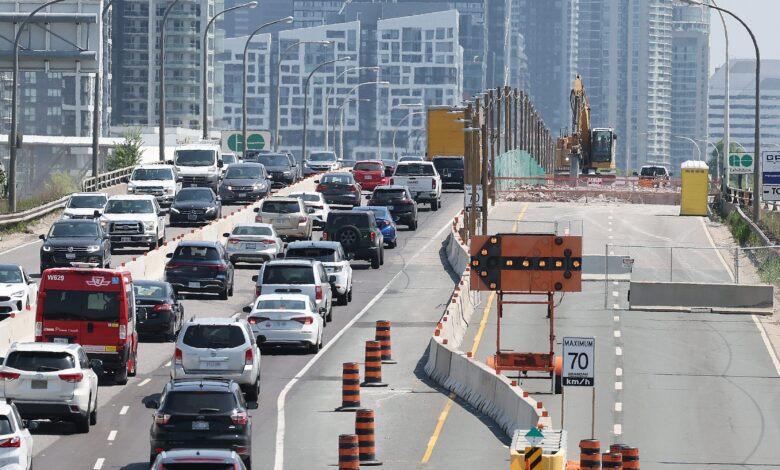
Toronto Mayor Olivia Chow said in October 2024 that the first stage of accelerated rehabilitation on the Gardiner Expressway was four months ahead of its original schedule. Crews had expanded working hours after lane reductions between Dufferin Street and Strachan Avenue produced severe congestion.
What was being rebuilt
The project involved demolishing and replacing approximately 700 metres of elevated roadway, rehabilitating supporting structures and installing upgraded lighting and traffic-management equipment. One eastbound and one westbound lane had been closed beginning in March 2024.
The structure was more than 60 years old, so deferring the work would not have eliminated disruption. The policy question was how to complete necessary repairs faster without compromising worker safety, engineering quality or nearby residents.
How the schedule changed
Ontario committed $73 million to accelerate construction. The arrangement increased work to a minimum of about 20 hours a day on six days each week, with a seventh day and full round-the-clock operations available when required.
Additional crews, equipment and shifts were combined with faster fabrication and delivery of components. Loud activity such as demolition was generally limited to daytime and evening hours, while quieter preparation and maintenance could continue overnight.
The revised target moved completion from April 2027 to at least April 2026. In October 2024, being four months ahead referred to progress against an earlier stage schedule; it did not mean that the entire expressway project was already finished.
Congestion carried real costs
Chow described near bumper-to-bumper traffic late at night and said delays took time from families. Businesses, freight movement, transit vehicles and emergency response can also be affected when traffic diverts onto surrounding streets.
The city adjusted more than 60 signal timings, changed the westbound traffic arrangement near the Jameson gate and considered ramp and north-south street operations. Travellers were encouraged to allow extra time, share trips or use transit where practical.
Why “24/7” needed context
Around-the-clock construction does not mean the same task continues without pause. Crews must change shifts, inspect equipment, manage concrete curing and conduct safety checks. Some operations cannot overlap, and weather or material availability can still affect the critical path.
The meaningful measure is completed, inspected work per week—not whether machinery is visibly active every minute. Reporting should also identify the public cost of acceleration and any noise, safety or quality incidents.
The later result exceeded the promise
The Dufferin-to-Strachan section ultimately reopened all six lanes in late 2025, approximately 18 months ahead of the original schedule. Final work and maintenance were coordinated through temporary closures.
That outcome supports the claim that additional shifts, incentives and coordinated management accelerated delivery. It does not prove that every project should automatically operate overnight; each site has different safety, neighbourhood, labour and sequencing constraints.
A model with limits
Toronto later applied lessons from the section to other Gardiner bridge repairs, including extended hours, early-completion incentives and traffic-management measures. Reuse is sensible when evidence shows which interventions actually shortened the critical path.
Chow was justified in celebrating measurable progress while residents were still enduring delays. The most credible celebration, however, came with the verified reopening—not the interim forecast. Public agencies build trust when they publish both milestones and costs, acknowledge disruption and distinguish being ahead on one stage from completing the full job.