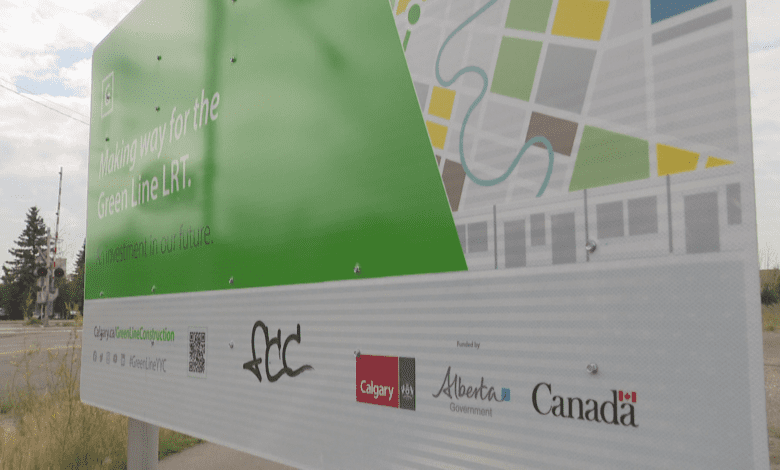
Alberta and Calgary agreed in October 2024 that design work could continue on the southeast portion of the Green Line LRT between 4 Street S.E., near Victoria Park, and Shepard. The interim agreement preserved work and contracts while the province studied a different route through downtown.
What the governments agreed
Transportation Minister Devin Dreeshen and Mayor Jyoti Gondek said work from 4 Street S.E. to Shepard could advance. They estimated the decision would preserve more than 700 jobs and retain value from money already spent on design and enabling work.
The province also reaffirmed that its previously committed $1.53 billion remained available during the interim period. That statement protected a funding commitment; it was not the same as approving every element of the city’s earlier alignment.
Why the project had reached an impasse
Calgary had approved a revised first phase in July 2024 after rising costs forced the project to be shortened. The province then withdrew support for that version, objecting particularly to the proposed downtown tunnel and arguing that the line should serve more southeast communities.
The city began winding down the previous plan, creating risk that contracts, specialist teams and completed design would be lost. Starting again would have added procurement costs and delayed construction even if governments later reached agreement.
A separate downtown review
Alberta hired engineering firm AECOM to examine at-grade or elevated routes through the centre of Calgary. The study had to consider connections with the existing Red and Blue lines, the event centre, the Canadian Pacific Kansas City rail corridor, traffic, utilities and the Plus 15 pedestrian network.
Keeping southeast design moving allowed work with fewer alignment disputes to continue while those downtown questions remained open. It did not eliminate the need to test ridership, accessibility, construction disruption and cost across the full operating line.
Preserving work is not the same as building transit
A design contract can retain technical knowledge and jobs, but riders benefit only when an integrated route is funded, constructed and opened. A disconnected southeast segment would require a practical downtown connection and coordination with the rest of Calgary Transit.
Accountability therefore needed more than announcing that work had resumed. Governments had to disclose the scope being preserved, potential throwaway costs, revised schedule, contingency and how each alignment affected travel time and projected use.
The project moved forward in 2025
Calgary council approved a new direction in January 2025. Federal and provincial approval of the updated business case followed in March, allowing construction of the southeast segment to begin that summer.
The approved phase carries funding commitments totalling approximately $6.25 billion. Its southeast portion is planned as 16 kilometres with ten stations from Shepard to the Event Centre/Grand Central Station, along with 28 low-floor vehicles, a maintenance facility and park-and-ride sites.
Downtown decisions were still evolving
By 2026, southeast construction was active, with opening targeted for 2031. The downtown segment remained in functional planning, and council directed staff to compare alternative surface and elevated routes before committing to construction.
That later history clarifies the significance of the October 2024 agreement. It did not settle the entire Green Line debate, but it prevented an all-or-nothing dispute over downtown from discarding usable southeast work.
The durable test is whether Calgary receives a connected, accessible system within an openly reported budget. Preserving jobs and prior investment was valuable; converting that value into reliable transit requires stable intergovernmental decisions and transparent management through the remaining years of construction.