U.S. Accuses Russian TV Network of Conducting Covert Intelligence Acts
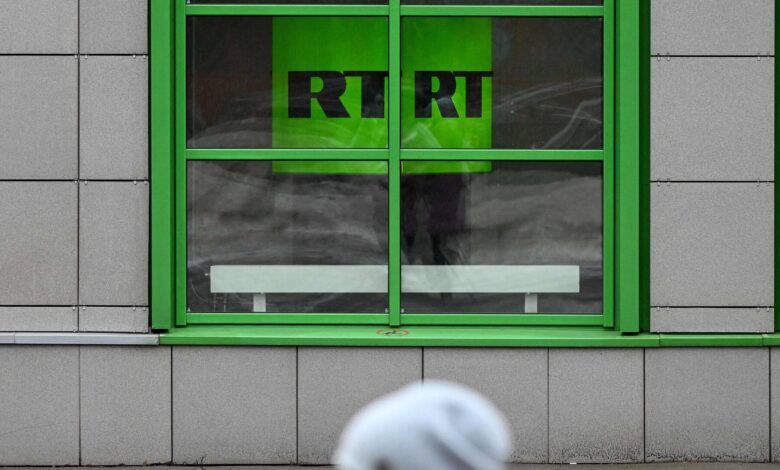
The United States accused the Russian state-funded broadcaster RT in September 2024 of conducting covert influence, intelligence-support and military-procurement activity beyond ordinary journalism. Washington imposed sanctions and began a diplomatic campaign, while RT and Russian officials rejected the allegations as an attack on media freedom.
The allegation extended beyond biased coverage
Governments regularly criticize foreign broadcasters for propaganda. The United States case was broader: officials said RT had developed operational cyber capabilities and acted as an arm of Russian intelligence and influence efforts.
Those assertions were made by American authorities and were not independent court findings.
Washington described an embedded cyber unit
State Department officials said a unit with intelligence links had been integrated into RT in 2023. They alleged that it collected information and supported covert operations while remaining hidden behind the broadcaster’s public identity.
The precise evidence available to the public was limited by intelligence sensitivities.
A senior editor was tied to military fundraising
American officials alleged that RT deputy editor-in-chief Anton Anisimov administered a crowdfunding effort that purchased equipment for Russian forces in Ukraine. The claimed supplies included body armour, communications equipment, rifles and drones.
Reporting should attribute that list because RT disputed the government’s characterization.
Influence allegations covered several regions
The State Department said RT-linked actors sought to influence politics in Europe, Africa and Latin America. It also accused the organization of supporting covert activity around Moldova’s elections.
Countries receiving the briefing were asked to assess the information under their own laws rather than accept a universal American ban.
Sanctions targeted corporate entities
The Treasury action covered RT’s parent organization, TV-Novosti, and the state media group Rossiya Segodnya, among others. Sanctions can freeze property under United States jurisdiction and restrict transactions involving American persons.
They do not by themselves prove a criminal charge against every employee.
RT rejected the case
The broadcaster responded with ridicule and denial, and Moscow portrayed the action as censorship. That defence raised a legitimate general question about press freedom, but it did not answer every specific allegation about procurement or covert state direction.
Governments must show why restrictions are necessary and proportionate.
State media and independent journalism are not identical
Public funding alone does not make a newsroom an intelligence service; many democratic countries fund broadcasters with editorial safeguards. The relevant questions are control, undisclosed state tasks and conduct outside news gathering.
Sanctions should focus on evidenced activity rather than nationality or unpopular viewpoints.
Foreign influence requires transparency
Audiences deserve to know who finances political messages and whether seemingly independent voices are coordinated. Platforms and publishers can label state affiliation, preserve archives and disclose paid distribution without automatically removing lawful speech.
Evidence standards remain important because labels can themselves be used politically.
The dispute combined security and civil-liberties risks
Russia has used information operations alongside military action, giving democratic governments reason to scrutinize hidden networks. At the same time, vague claims of disinformation can become a pretext to suppress reporting.
The strongest response is therefore specific and reviewable: identify the alleged actors, conduct, money and legal authority; release evidence when it can be protected; permit challenges; and distinguish propaganda from espionage or material support. The September action made serious allegations against RT. Its credibility ultimately depended on that evidentiary discipline, not on the broadcaster’s reputation alone.