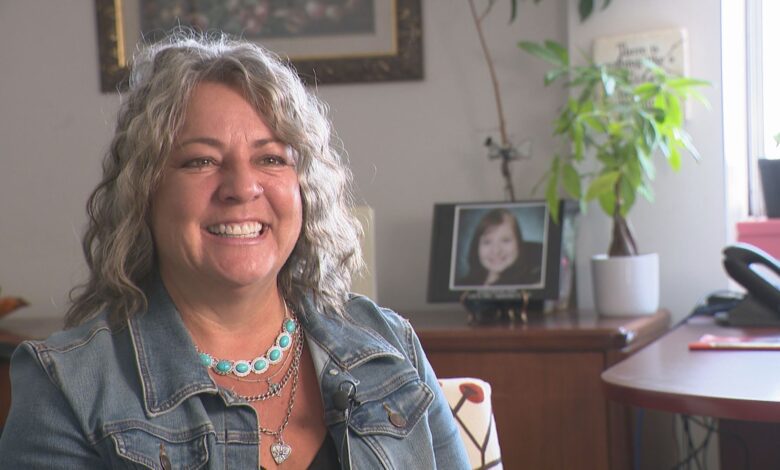
Jacqueline Tisher founded Hope’s Home in Regina in 2005 after her experiences as a pediatric nurse, mother and foster parent revealed a gap between hospital care and ordinary child care for children with complex medical needs. What began in her home grew into a Saskatchewan network built around medically inclusive care.
The personal origins of the idea
Tisher’s first daughter, Acacia, was born with spina bifida in 1993. Caring for her introduced the family to the coordination, equipment and clinical knowledge that a child with a disability may need while still wanting the same relationships and play as any other child.
Tisher later became a foster mother to Hope Dawn Marie, a medically fragile infant who spent much of her short life in Regina General Hospital and died in February 2004 at ten months old. Hope’s life inspired the name and purpose of the organization.
From nursing to a new model
Tisher had worked as a registered nurse in pediatric and neonatal intensive care. She saw that skilled support available in hospital was difficult for families to find in a community child-care setting.
That gap can leave a parent unable to return to work, separate siblings into different arrangements or keep a child in a clinical environment longer than necessary. Tisher’s model brought nurses, early-childhood educators and developmental staff into one inclusive programme.
Hope’s Home opened in 2005
The first facility opened in Regina on November 1 with about a dozen children moving from Tisher’s home daycare. It was described as Canada’s first medically inclusive child-care centre.
Rather than segregating children according to diagnosis, the programme included children with complex medical needs, their siblings and children without medical needs. Clinical monitoring could occur while children joined age-appropriate learning, play and social activities.
What complex care can involve
A medically complex condition may be chronic or progressive and can become unstable or life-threatening. Depending on the child, safe participation may require medication, tube feeding, seizure response, respiratory support or close observation by a nurse.
Care plans must be individualized. A diagnosis alone does not tell staff what a child can do, and inclusion does not mean ignoring clinical risk; it means arranging the necessary support so that medical needs do not unnecessarily exclude a child from community life.
Growth across Saskatchewan
Hope’s Home expanded to centres in Regina, Prince Albert and Saskatoon, along with supportive-living services. Tisher was approached by organizations elsewhere in North America seeking to understand how the model combined child care, health care and public funding.
The growth depended on trained employees and stable government support, not inspiration alone. Nursing coverage, accessible buildings, low ratios and emergency planning cost more than a conventional daycare can recover through ordinary parent fees.
Why the model matters to families
Reliable care gives parents time to work, rest or attend to other children while knowing that staff can recognize and respond to a medical change. It can also reduce isolation by allowing siblings and peers to learn together.
The benefits belong to children as well: friendship, play and belonging should not be treated as optional because a child uses medical technology or needs continuous observation.
A legacy measured in access
Tisher’s story is moving because it grew from loss, but its public importance lies in the system she helped build. A charitable founder cannot by herself solve the national shortage of inclusive child care.
Hope’s Home demonstrates a practical model governments can evaluate and fund: combine medical and early-learning expertise, include children with different needs in the same community, and give families a dependable alternative to choosing between safety and participation. Its success should be measured not only by the number of centres, but by how many children can safely experience an ordinary childhood close to home.