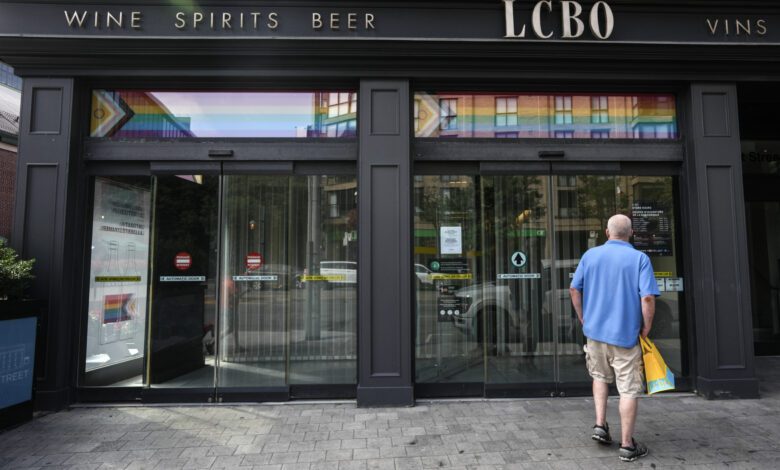
The Liquor Control Board of Ontario said in October 2024 that free paper bags would return to stores “in the coming weeks,” reversing a policy introduced a year earlier. The change followed a direction from Premier Doug Ford and triggered a separate dispute over where the bags would be manufactured.
Why the bags had disappeared
The LCBO stopped routinely supplying paper bags in September 2023. It encouraged customers to bring reusable bags, buy one in the store or use available cardboard boxes. The Crown corporation estimated that the change would remove roughly 135 million single-use bags from annual circulation, save the equivalent of 188,000 trees and avoid 2,665 tonnes of waste going to landfill.
Those were projected environmental benefits, not a finding that every paper bag necessarily reached landfill. The policy also shifted responsibility to customers, who sometimes arrived without a reusable carrier.
Ford ordered a reversal
In an April 7 letter, Ford told the LCBO to bring paper bags back. He argued that customers should not have to pay for a reusable bag or carry alcohol openly after making a purchase, particularly while households faced higher living costs.
The government’s convenience and affordability argument had to be weighed against the LCBO’s waste-reduction case. A free bag has a procurement cost even when the customer does not pay for it at the checkout, and that cost ultimately belongs in the public retailer’s accounts.
The first supply contract
After a public request for quotations, the LCBO selected Rosenbloom Groupe Inc. of Quebec for a contract worth about $10.9 million. The company had supplied LCBO bags before the 2023 phase-out, and the new award allowed distribution to resume.
Ford then objected that the winning supplier was outside Ontario. On October 23, he directed the LCBO to start another tender restricted to Ontario companies while using the selected vendor to get bags into stores promptly.
What customers actually experienced
Paper bags did return, but the procurement story did not end with the October announcement. In November 2025, the LCBO said it planned a new Ontario-only competition, with a replacement contract expected by the summer of 2026. The Quebec agreement remained the bridge while that process moved forward.
This later timeline matters because “the coming weeks” described customer availability, not the completion of every political direction attached to the purchase.
The environmental tradeoff
Paper is renewable and widely recyclable where local programmes accept it, but manufacturing and transporting a single-use bag still consume material and energy. Reusable bags also have a production footprint and deliver their intended benefit only when used repeatedly.
The practical low-waste approach is therefore to reuse a durable bag already owned, decline a new bag when an item can be carried safely, and reuse or recycle a paper bag when one is needed. The material label alone does not determine the full environmental result.
Transparency was essential
Because the LCBO is publicly owned, the reversal raised legitimate questions about total cost, remaining inventory, contract termination terms and the reason for restricting a future tender by geography. Publishing the procurement record allows residents to distinguish a competitive result from a political preference.
The return of paper bags addressed a visible customer frustration, but it also restored a large stream of single-use material. A complete assessment should report how many bags are actually distributed, the cost per bag, recycled content and waste outcomes—not simply declare either convenience or sustainability the winner.