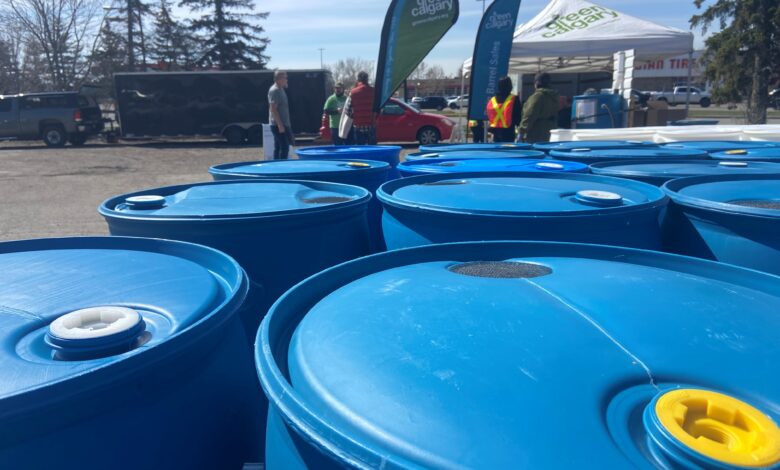
Green Calgary urged residents to winterize rain barrels before sustained freezing weather arrived in October 2024. The task is simple, but it matters: water left inside a barrel, hose or fitting expands when it freezes and can crack the container or damage its hardware.
Drain the entire system
Start by using or releasing the remaining water while the ground can still absorb it. Open the spigot and tip the barrel enough to remove water trapped below the outlet. Disconnect overflow tubes, hoses and any downspout diverter, because small pockets of water can freeze inside those parts as well.
If a diverter normally sends roof water into the barrel, restore the downspout’s winter route so melting snow and rain continue to drain away from the building. Water should not be allowed to collect beside the foundation merely because the barrel has been disconnected.
Clean without creating a new problem
Remove leaves and sediment, then give the interior a light rinse. Green Calgary advised against aggressive cleaning that could damage the barrel. A mild wash is generally enough for seasonal storage; any product used should be suitable for the barrel material and should not leave a harmful residue that later reaches a garden.
Check the screen, lid, seals and spigot while everything is accessible. A worn washer is inexpensive to replace before spring, while a leaking fitting discovered after the barrel is full can waste much of the water it was meant to conserve.
Choose protected storage when possible
A shed or garage offers the best protection from temperature swings, wind and ultraviolet light. The space does not necessarily have to be heated if the barrel is completely empty and its material is designed for cold storage.
Where indoor storage is not available, Green Calgary recommended turning the empty barrel upside down and securing it. An inverted barrel cannot collect snowmelt, and fastening it prevents a lightweight container from blowing into a road, yard or neighbouring property.
Do not rely on an open tap alone
Leaving the spigot open may not drain a barrel completely. Ice can form in a low point, an attached hose or around a valve. Removing accessories and physically checking the interior provides better protection than assuming gravity has emptied every component.
Residents should also follow the manufacturer’s instructions. Some collapsible or decorative systems use materials and fittings that require different disassembly, and an improvised bend or forceful removal can cause the very crack winterizing is intended to prevent.
Why the advice gained attention
Green Calgary reported that rain-barrel sales in spring 2024 were about three times the level seen in recent years. Executive director Lex van der Raadt said a barrel might last around seven years on average and potentially much longer when maintained properly.
Interest had grown as Calgary residents confronted drought concerns and outdoor water restrictions following the Bearspaw South Feeder Main rupture. A barrel cannot replace a municipal supply, but it can capture roof runoff for gardens and reduce demand for treated water during dry periods.
A safe spring restart
Before reconnecting the system, inspect for hairline cracks, confirm that the base is level and stable, and make sure the overflow points away from the foundation. Clean the screen so mosquitoes cannot enter and so debris does not block the outlet.
Winterizing is therefore less about a complicated treatment than about eliminating trapped water and protecting the container. A few careful steps in autumn can prevent a cracked barrel, avoid unnecessary replacement waste and keep a small but useful conservation tool ready for the next growing season.