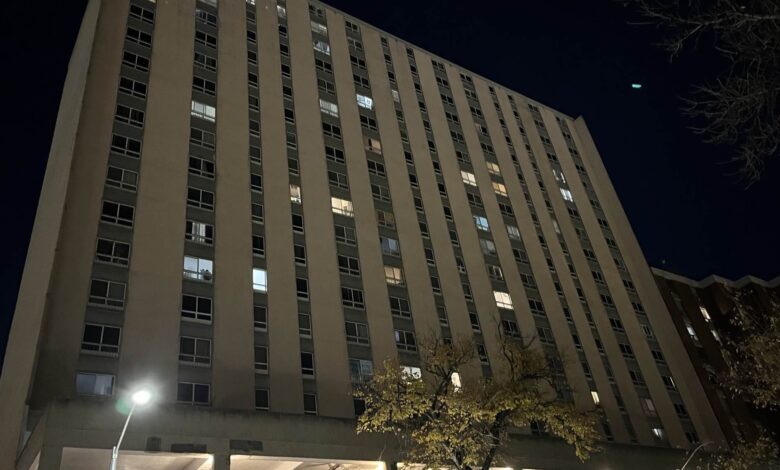
A young child died after falling from a 19th-floor apartment in the 300 block of Cumberland Avenue in Winnipeg on Thanksgiving Monday, October 14, 2024. Police were called at approximately 5:30 p.m. and later said their investigation determined that the death was accidental.
What police confirmed
Early reports described the child as being between four and six years old; police otherwise protected the child’s identity. Emergency responders transported the child for medical care, but the child did not survive.
The Winnipeg Police Service child abuse unit investigated, as specialized investigators do for sudden or unexplained deaths involving children. Police said on Tuesday that no arrests would be made and that the incident was not criminal in nature.
What the conclusion means
An accidental-death determination rules out the criminal explanation police were assessing on the available evidence. It does not make the family’s loss less serious, and it should not be used to assign blame to a parent, tenant, property employee or any other person without evidence.
The public record did not establish that deliberate conduct, neglect or a building-code violation caused the fall. Speculation about those possibilities would go beyond what investigators disclosed.
Questions about the window
Residents interviewed by another local outlet raised concern about how a window could open far enough for a child to fall. Video supplied by a resident appeared to show bars and a wooden opening limiter on some windows.
Those observations did not establish the condition or configuration of the particular window involved. The building owner declined to comment, citing privacy. Without an inspection report, it would be unsafe to infer that a guard was missing, altered or defective.
General high-rise safety
Window screens are designed mainly to keep insects out; they are not fall-prevention devices. Child-safety guidance recommends code-compliant guards or opening-control devices where a young child could reach a window, with emergency-egress requirements considered.
Beds, chairs, tables and climbable storage should be kept away from accessible windows and balcony rails. Devices should be checked after maintenance, a tenancy change or seasonal use, and an owner or qualified professional should address any loose, bypassed or damaged component.
Supervision is only one layer
Young children move quickly and do not reliably understand height. Effective prevention uses several layers—adult supervision, safe furniture placement, secure hardware and building maintenance—rather than assuming one caregiver can continuously anticipate every movement.
Residents should not permanently block a required fire exit or improvise a device that creates another hazard. Local building and fire officials can clarify the correct requirement for a particular window type.
Responsible coverage of a child’s death
Publishing a child’s name, family details or unverified photographs would add intrusion without improving public understanding. The legitimate facts were the location and time, the fatal fall, the police investigation and its accidental conclusion.
Reports should also avoid vivid reconstruction. No public benefit comes from describing a child’s final moments when authorities have not identified a continuing threat or asked for witnesses.
A narrow but important lesson
Families in high-rise housing deserve safety information without being portrayed as careless, and property operators should make window-control inspections part of routine maintenance. Residents who find a window that opens unexpectedly wide should keep children away and report it promptly.
This tragedy did not produce a public allegation of crime. The most accurate account therefore combines restraint with prevention: honour the family’s privacy, state the police conclusion clearly and use only general, evidence-based safety advice rather than presenting an imagined cause as fact.