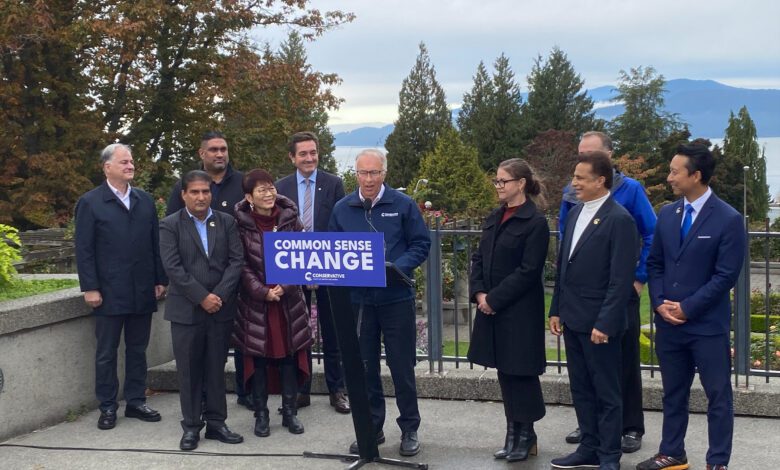
The Conservative Party of British Columbia released its full 2024 election platform on October 15, four days before voting day. Leader John Rustad centred the document on affordability, public safety and addiction recovery while promising tax reductions, faster housing approvals and elimination of the provincial consumer carbon price.
Affordability promises
The party proposed a “Rustad Rebate” tied to rent or mortgage-interest costs. Rustad said tax relief would begin at about $1.5 billion in the first year and rise to approximately $3 billion annually when fully implemented.
The platform also promised to remove provincial sales tax from qualifying affordable used vehicles, reduce the small-business tax rate to one per cent and accelerate approvals for housing and investment.
Carbon pricing
Conservatives said they would scrap the consumer carbon tax and what they characterized as hidden carbon charges. Removing a price can reduce an immediately visible cost, but the fiscal and climate result depends on foregone revenue, rebates and the replacement policy for reducing emissions.
Voters needed to distinguish the provincial charge from federal requirements and industrial systems. A government cannot repeal rules outside its jurisdiction simply by including them in a platform.
Safety and addiction policy
The party promised stronger action against repeat and violent offenders, expanded addiction treatment and mandatory treatment in some cases involving adults or youth. It opposed the distribution of illicit drugs and related equipment and proposed moving people from encampments into support services.
Compulsory care raises legal, clinical and capacity questions: who qualifies, who authorizes confinement, what evidence supports treatment and where people go afterward. A pledge requires beds, trained staff, review rights and outcome reporting to become a workable system.
Housing and municipalities
Conservatives proposed repealing provincial density law Bill 44 unless individual municipalities supported it. They also promised a $1-billion annual Civic Infrastructure Renewal Fund for communities building homes and said low-barrier housing or shelters would not be forced on an unwilling community.
Local consent can improve siting, but a universal veto may leave region-wide housing and homelessness obligations unmet. Costing must include water, transit, schools and services as well as approval speed.
Economic development and First Nations
The platform supported liquefied-natural-gas projects, manufacturing, interprovincial trade, private-sector job growth and the Canadian Northern Corridor concept. It proposed returning management of 20 per cent of provincial forests to First Nations.
“Economic reconciliation” needs nation-by-nation consent, legal clarity and fair sharing of revenue and risk. A percentage in a campaign document cannot replace consultation with rights holders.
Education and child care
The party said it would remove the SOGI 123 resource from schools and replace it with a zero-tolerance anti-bullying approach. It also promised to expand access to $10-a-day child care.
Anti-bullying rules should protect every student, including LGBTQ students, and changes to teaching resources should be assessed against evidence and human-rights obligations rather than slogans from either side.
The deficit target
Conservatives promised to eliminate a provincial deficit approaching $9 billion within two terms while reducing several taxes and maintaining or expanding important services. They also proposed requiring public approval for new taxes through an election or referendum.
The platform described broad growth and spending assumptions, but voters still needed year-by-year projections, sensitivity to slower growth and a list of programmes that would change. A costed label does not remove uncertainty.
How to assess a platform
Campaign commitments are proposals, not enacted policy or guaranteed outcomes. A fair comparison examines jurisdiction, implementation date, gross cost, offsetting revenue, distribution among households and measurable result.
The Conservatives offered a clear change agenda shortly before the vote. Its central tradeoff was equally clear: large tax relief and new commitments had to coexist with deficit elimination. The credibility of the package depended on the financial and legal details connecting those promises.