Facing a Big Test, Iran’s ‘Axis of Resistance’ Flails
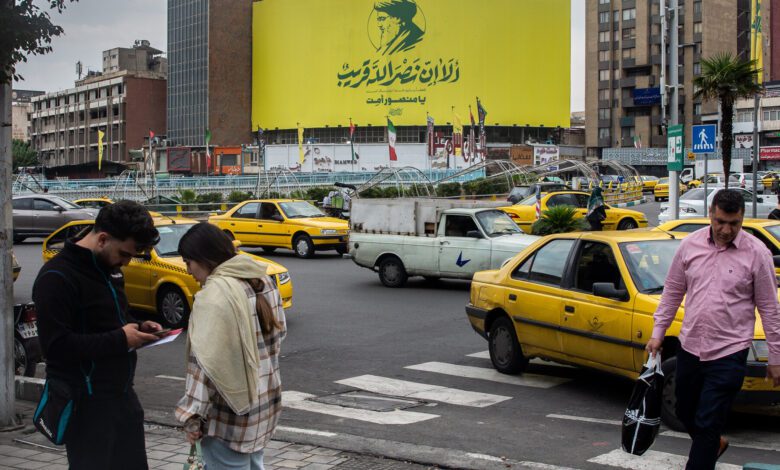
Israel’s September 2024 campaign against Hezbollah killed senior commanders, disrupted communications and culminated in the death of leader Hassan Nasrallah. The blows created the sharpest test in years for the Iran-backed network often called the “axis of resistance,” but describing its early response as failure risked treating a loose coalition as a single army.
The network served Iran’s deterrence strategy
Iran developed relationships with armed groups in Lebanon, Iraq, Syria, Yemen and the Palestinian territories. They shared opposition to Israel and United States influence, while receiving different combinations of money, weapons, training and political support.
The network allowed Tehran to project power without relying solely on conventional forces. It also created distance between Iran and actions that could trigger direct war.
Hezbollah was its most capable member
Hezbollah combined a large missile arsenal and experienced fighters with deep influence in Lebanese politics. It began firing across the Israel-Lebanon border on October 8, 2023 in stated support of Hamas, displacing civilians on both sides.
Iran’s other partners had different capabilities. Yemen’s Houthis attacked Red Sea shipping and Israel, while Iraqi militias launched drones and rockets; neither could simply replace Hezbollah’s position on Israel’s northern border.
Israel exploited intelligence and air superiority
Exploding communications devices in mid-September injured thousands in Lebanon, including civilians, and disrupted Hezbollah’s organization. Israeli strikes then killed commanders and hit weapons and infrastructure.
The September 27 airstrike that killed Nasrallah in Beirut’s southern suburbs destroyed residential buildings and killed other people as well. Tactical success for Israel did not erase the civilian cost or legal duty to distinguish military targets and use proportionate force.
Partners did not launch one coordinated war
Iranian-backed groups continued attacks, but there was no simultaneous ground offensive capable of rescuing Hezbollah from Israeli pressure. Each actor had local political constraints, separate command structures and an interest in survival.
That behaviour exposed limits in the “axis” label. Shared sponsorship and rhetoric did not create NATO-like mutual-defence obligations.
Iran faced competing risks
A direct, large attack could demonstrate commitment and restore deterrence, but it might invite Israeli and U.S. strikes on Iran. Restraint could preserve the state while making allies question the value of Tehran’s protection.
Iran’s new president, Masoud Pezeshkian, was also presenting a less confrontational diplomatic message at the United Nations. The elected government’s preferences remained constrained by the supreme leader and Revolutionary Guard.
Events soon moved beyond initial restraint
On October 1, Iran launched roughly 180 ballistic missiles at Israel, saying it was responding to the killings of Nasrallah and other leaders. Israel later struck Iranian military targets.
Those exchanges showed that early caution was not permanent. Most missiles were intercepted or caused limited damage, but direct state-to-state attacks raised the danger of wider war.
Hezbollah survived but accepted a ceasefire
Fighting and Israeli ground operations continued until a ceasefire took effect in late November 2024. Hezbollah remained armed and politically present, yet had lost senior leadership, personnel, infrastructure and freedom of action.
The later fall of Bashar al-Assad’s government in Syria disrupted a key land route between Iran and Lebanon, creating another strategic setback for the network.
Civilians should not disappear inside strategy
Lebanese civilians endured mass displacement and extensive destruction, while Israeli border communities had spent months displaced under rocket and drone fire. Gaza’s population continued to face catastrophic war conditions.
Analysis that scores only deterrence can turn those lives into background variables. Armed groups and states remain responsible for how they conduct hostilities.
The “axis” was weakened, not erased
September exposed intelligence failures, uneven coordination and Iran’s reluctance to risk regime survival for a partner. Later retaliation proved the network was not simply inactive, while the ceasefire and Syrian upheaval confirmed lasting damage.
The accurate conclusion is narrower than the headline: Iran’s alliance system could harass several adversaries and impose costs, but it could not shield Hezbollah from concentrated attack. Its members shared a cause without acting as one force, and their resilience did not make the strategy safe for the region’s civilians.