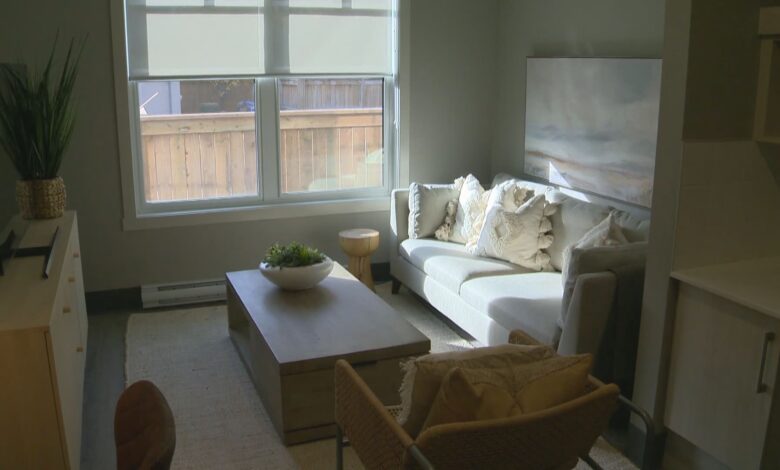
Hope Heights opened in Calgary’s Crescent Heights neighbourhood in October 2024 with 35 affordable one-bedroom homes for people facing housing insecurity. The four-storey HomeSpace Society project combined apartments with on-site support and an intergenerational model centred on young single mothers, children and seniors.
Who the building was designed to serve
Ten units were designated for vulnerable young mothers and their children. Other apartments were intended for seniors and additional residents needing affordable housing, with a particular focus on Indigenous community members.
A one-bedroom layout will not fit every family, but a stable home can give a parent a foundation for education, work, health care and child development. For an older resident, the same building can reduce the danger of isolation.
The intergenerational idea
Hope Heights was designed so residents at different life stages could form relationships rather than live in separate programmes. Seniors may offer knowledge and informal connection, while families can add daily activity and mutual support.
Those benefits should emerge by choice. Older tenants are neighbours, not unpaid child-care workers, and mothers receiving assistance retain privacy and control over their family life.
Support beyond rent
Highbanks Society and McMan Youth, Family and Community Services of Calgary were to provide cultural programming, mentorship, life-skills training and daytime case-management support. HomeSpace operated the building.
Wraparound service can help residents navigate benefits, education, employment and health systems. It should remain voluntary and confidential wherever possible so a tenancy does not depend on disclosing more personal information than necessary.
How the project was funded
Earlier project announcements identified approximately $7.3 million in federal financing through the Canada Mortgage and Housing Corporation, about $2.1 million from Alberta and nearly $873,000 from the City of Calgary. Builder Hopewell contributed roughly $1.3 million.
Hope Heights was the final building associated with the RESOLVE campaign launched in 2012, through which homebuilders, governments and non-profit partners raised $75 million for affordable housing.
What “affordable” should mean
A ribbon cutting and unit count do not show whether the intended residents can sustain the rent. Transparent reporting should compare rents with tenant income, identify subsidies and show how long affordability commitments remain in force.
Operating funding matters as much as construction. Case workers, repairs, utilities and security continue after capital donors leave, and unstable support can undermine an otherwise successful building.
Only a small share of the need
HomeSpace chief executive Bernadette Majdell acknowledged that 35 apartments were modest beside Calgary’s housing crisis, while emphasizing that each unit was still a home. The project opened as high rent and limited vacancies were placing increasing pressure on low-income residents ahead of winter.
The correct response to small scale is replication, not dismissal. Governments can shorten approvals, contribute land and coordinate capital and operating grants, but each future project still needs accessible design and transit, school and service connections.
How success can be evaluated
Useful measures include housing retention, rent burden, resident safety, service use, school continuity for children and whether seniors report less isolation. Results should be aggregated to protect people whose circumstances make them easy to identify.
Residents should also have a voice in building rules and programme design. A supportive model works best when it treats people as tenants with rights rather than subjects of charity.
A platform for stability
Hope Heights illustrated why affordable housing is both physical infrastructure and a relationship. The apartments offered privacy and security; the partner organizations could help residents connect that stability to longer-term goals.
Its 35 doors did not solve Calgary’s shortage. They demonstrated a fundable model in which public money, industry contributions and non-profit expertise produced permanent homes instead of another temporary response to homelessness.