Manitoba appointed former federal cabinet minister Lloyd Axworthy to lead a $200,000 feasibility study on relocating some Winnipeg rail lines in October 2024. The review was intended to examine safety, transportation, land use and development opportunities around corridors that have divided neighbourhoods for generations.
A long-running Winnipeg question
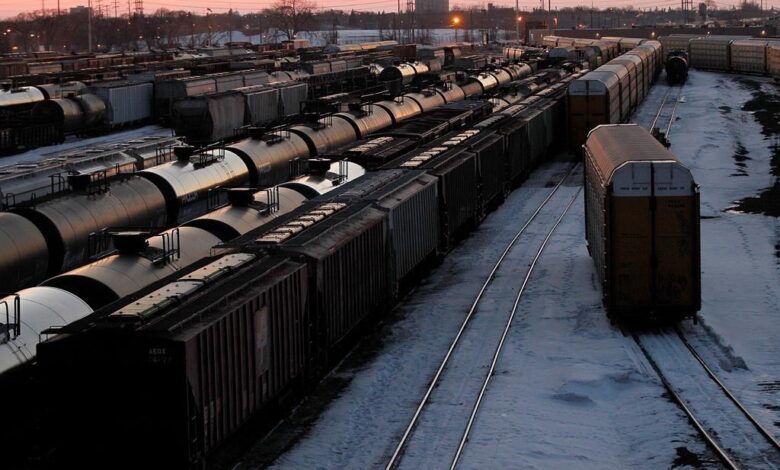
Freight railways are central to Winnipeg’s economy and history, but tracks and yards consume large areas, create difficult crossings and separate homes from jobs and services. Proposals to move or consolidate them have returned repeatedly without a complete plan.
A feasibility study does not approve relocation. It determines which segments might move, what the alternatives cost and whether benefits justify disruption to rail operations.
Why Axworthy was selected
Premier Wab Kinew announced the appointment with Transportation and Infrastructure Minister Lisa Naylor and Kate Kehler of the Social Planning Council of Winnipeg. Axworthy had represented Winnipeg federally and served in senior cabinet roles.
He said the review could connect rail strategy with Winnipeg’s role as a transportation hub while examining safety, secure and efficient crossings, housing and open space.
What relocation could unlock
Land no longer required for yards or tracks could support housing, parks, streets and active transportation. Removing certain crossings might improve emergency response and reduce collisions or long waits at blocked roads.
Redevelopment is not automatic. Former railway land may need environmental assessment and remediation, and a continuous corridor can cross many ownership and zoning boundaries.
The freight-network test
Canadian railways move national and international freight, so a local change can affect routes far beyond Winnipeg. New alignments need suitable grades, curves, bridges, yards and connections and must avoid simply transferring noise and risk to another community.
The study needed direct participation from rail companies, workers, customers, municipalities and surrounding First Nations. Jobs and supply-chain reliability belonged in the same analysis as urban redevelopment.
Mayor Gillingham’s conditions
Winnipeg Mayor Scott Gillingham supported Axworthy’s appointment and asked for firm information on costs, funding sources, employment, rail operations and city infrastructure. Those questions distinguish a practical proposal from a map showing tracks moved elsewhere.
He also urged consideration of smaller actions that could begin sooner, such as repurposing abandoned spur lines and underused corridors for homes or walking and cycling routes.
Alternatives to wholesale relocation
Grade separations, fencing, safer pedestrian crossings, quiet-zone measures and targeted yard consolidation may solve a specific problem at lower cost. In other locations, relocation could deliver benefits that no single bridge can achieve.
The study should compare packages rather than present an all-or-nothing choice. Each option needs lifecycle cost, construction time, land value, emissions and equity analysis.
Community effects
Neighbourhoods next to tracks include low-income and Indigenous residents who have often borne noise, delay and safety risk. They should help define the study’s goals and should not be displaced once newly developable land becomes valuable.
Affordable-housing requirements, anti-displacement measures and Indigenous partnership can make redevelopment benefits durable. Consultation after a preferred route is selected would come too late.
A decision-quality study
The final work should identify exact corridors, ownership, hazardous-goods implications, capital and operating costs, potential land revenue and the authority responsible for delivery. Uncertainty should appear as ranges rather than a single optimistic number.
Winnipeg had debated rail relocation for years because the opportunity was large and the constraints were real. Axworthy’s assignment could move the discussion forward only by making those tradeoffs explicit enough for governments, railways and affected communities to decide what should actually be built.