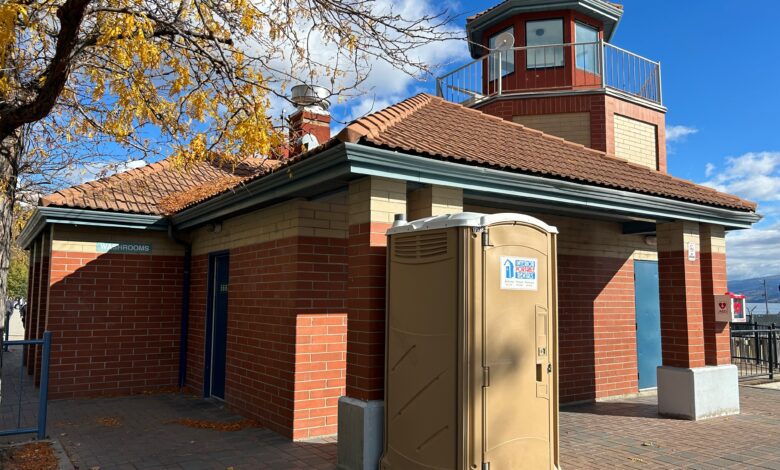
Peachland, British Columbia announced that a downtown public washroom would begin closing at 3:30 p.m. from October 24, 2024. The district cited repeated vandalism and said the reduced hours were also intended to discourage people from using the facility as a warm place to shelter.
Minimal but recurring damage
The district described the vandalism as limited in scale but repetitive. Repeated cleaning and repair can consume staff time and make a facility unavailable even when each incident is not severe.
Closing early may reduce unsupervised damage. It also removes a basic public service during hours when residents, visitors and people without housing still need sanitation.
A portable toilet as replacement
Officials placed a portable toilet nearby after reducing access. That preserved some function, but a portable unit may not provide the same lighting, handwashing, accessibility, warmth or safety as a permanent washroom.
An equitable replacement should be evaluated for wheelchair access, servicing frequency, winter conditions and whether users can find it easily after dark.
Why someone sheltered there
A person remaining in a washroom for warmth signals the absence of a safer alternative. Affordable-housing advocate Kathleen MacKinnon said communities should respond with compassion when a basic need was unmet.
Homelessness is not confined to large cities. Smaller communities may have fewer visible encampments but also fewer shelters, outreach teams, transit options and rental vacancies.
The district’s safety rationale
Mayor Patrick Van Minsel said the decision considered everyone’s safety, including people using the washroom as shelter. A public washroom is not designed for sleeping: it can have confined-space risks, no monitoring and no way to provide medical or emergency support.
That concern is real, but displacement alone does not create safety. A person excluded at 3:30 p.m. may move to a colder or more isolated location.
Public-health consequences
Accessible toilets support hygiene, tourism, older adults, families, people with disabilities and workers. Insufficient facilities can lead to public urination or defecation—the very conditions communities often seek to prevent.
Hours should therefore be based on demand and risk data. If evening vandalism is the issue, targeted cleaning, durable fixtures, lighting, attendants or monitored access may offer alternatives to a broad closure.
Privacy without unsafe design
Cameras can monitor entrances and surrounding public space but should never record inside a washroom. Good design uses clear sightlines outside, tamper-resistant fixtures, emergency call options and doors that protect privacy without concealing a prolonged medical crisis.
Enforcement staff should distinguish property damage from the simple act of seeking warmth. Outreach workers can offer transport, supplies and referrals without criminalizing poverty.
The missing housing response
The district said it was reviewing the situation, but residents and advocates wanted to know what support would replace the shelter people had improvised. Municipalities may need provincial funding and regional partnerships for warming spaces and supportive housing.
Earlier closing could be a temporary operational measure, not a complete homelessness policy. Peachland’s challenge was to protect a shared facility while ensuring the people displaced from it had somewhere safer to go. Transparent incident data and a named alternative would make that balance credible.