In Georgia, a Political Uproar Erupts Over a 2008 War With Russia
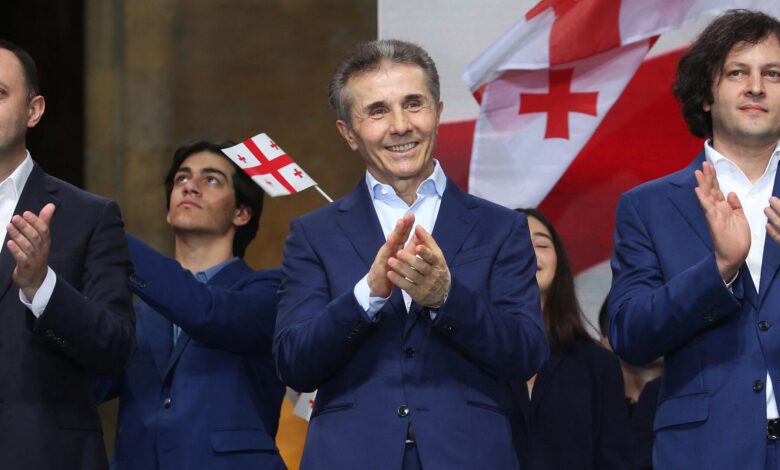
Georgia’s ruling-party founder Bidzina Ivanishvili provoked anger in September 2024 by saying Georgians should apologize to Ossetians for the 2008 war. His remarks blamed former president Mikheil Saakashvili’s government and “external forces,” reopening a traumatic dispute weeks before a parliamentary election.
The speech took place near the occupation line
Ivanishvili spoke at a Georgian Dream rally in Gori, close to Russian-controlled South Ossetia. He promised accountability for former United National Movement officials and reconciliation with Ossetians after the October vote.
Using the word apology made the message politically explosive.
The war followed years of escalation
Fighting erupted in and around South Ossetia in August 2008 after mounting attacks, provocations and Russian support for separatists. Georgian forces launched an assault on Tskhinvali, and Russia responded with a much larger intervention deep into Georgia.
A European Union-commissioned inquiry later described responsibilities and violations by multiple actors.
Russia transformed the result
Moscow recognized South Ossetia and Abkhazia as independent and expanded its military presence. Georgia and most other countries continue to regard both territories as part of sovereign Georgia.
Tens of thousands remained displaced, and Georgia severed diplomatic relations with Russia.
Opponents called the apology pro-Kremlin
The United National Movement and other critics said Ivanishvili distorted history, undermined non-recognition policy and blamed Georgia while Russian forces occupied its territory. Demonstrators said national reconciliation should not absolve Moscow.
Georgian Dream denied serving Russian interests.
The ruling party framed the election around peace
Georgian Dream portrayed itself as preventing a new war and accused opponents of seeking a “second front” against Russia after the invasion of Ukraine. That message appealed to genuine fear in a country with recent experience of conflict.
Critics said fear was being used to weaken pro-European opposition.
Reconciliation and responsibility are distinct
Georgian and Ossetian civilians suffered, and acknowledging harm can support future dialogue. An apology designed as an election weapon against domestic rivals, however, may deepen division rather than build trust.
Reconciliation also requires security, return rights and participation by affected communities.
The controversy followed democratic backsliding concerns
Earlier in 2024, Georgian Dream enacted a foreign-influence law despite mass protests and warnings from the European Union. Opponents compared it with Russian mechanisms used against independent media and civil society.
The government said disclosure was necessary to protect sovereignty.
Georgia’s European path was at stake
The country had received EU candidate status, but Brussels warned that recent laws and rhetoric threatened progress. Many Georgian citizens strongly supported European integration while also fearing war with Russia.
Those preferences were not inherently contradictory.
History required more than a campaign slogan
The 2008 conflict cannot be accurately described as either an unprovoked Georgian action or a war with only one decision-maker. The sequence included separatist violence, Georgian escalation, Russian planning and an overwhelming Russian military response.
Ivanishvili’s proposal mattered because it reassigned moral and political blame during an election. Responsible coverage should preserve the complex record, centre civilians on all sides and distinguish reconciliation with Ossetians from acceptance of Russia’s recognition and military occupation.
Voters deserved that distinction before judging the governing party’s promise.