
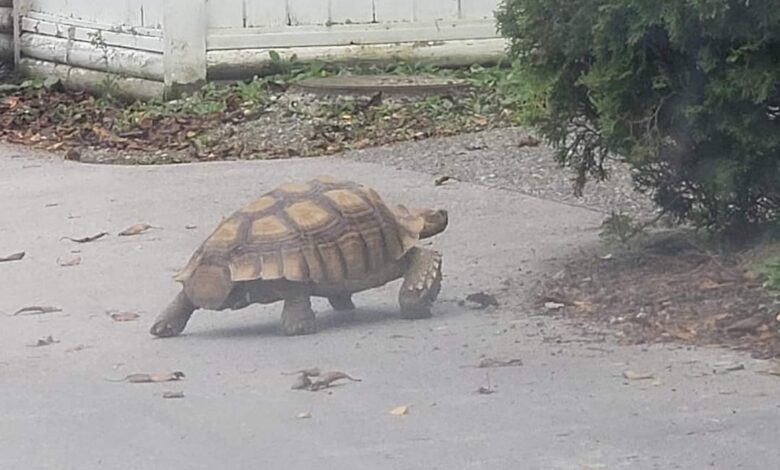
Excavator, a 14-year-old African spurred tortoise, was reunited with his family in Richmond, British Columbia, after leaving an open backyard gate in October 2024. A member of the public found the tortoise outdoors and alerted the Langley Animal Protection Society.
A slow escape can still cover ground
Owner Marika De Mooy said Excavator normally lived in a heated outdoor doghouse. Although a tortoise does not move like a fleeing dog, it can travel steadily, conceal itself under plants or structures and become difficult to spot.
The open gate created a simple route out of the yard. The safe return showed why neighbours and animal organizations should be notified quickly rather than assuming a slow animal will remain nearby.
Cold was the immediate concern
African spurred tortoises, also called sulcata tortoises, originate in hot, dry regions of Africa. They depend on an appropriate external heat source because reptiles do not regulate body temperature in the same way mammals do.
Richmond’s cool autumn conditions could therefore become dangerous, especially overnight. A recovered reptile that feels cold, appears weak or has been exposed to unknown hazards should be assessed using advice from a veterinarian experienced with exotic species.
How the reunion happened
De Mooy appealed publicly for help after Excavator disappeared on a Thursday afternoon. By Friday morning, she learned that someone had seen the tortoise wandering outside and contacted the animal-protection organization.
Publicity works best when it includes a clear photograph, last known location, time, distinguishing features and a direct contact route. Owners should avoid publishing unnecessary personal information or encouraging untrained people to chase an animal into traffic.
Safe handling
A large tortoise can be heavy and strong. A finder should keep it away from roads, dogs and steep drops, but should not lift it by the legs or shell edges. It should never be placed in water as an improvised test or treatment.
Temporary warmth must be controlled; direct contact with a heater can burn a reptile. Local animal control or an exotic-animal professional can provide species-appropriate instructions while an owner is located.
Preventing another departure
Sulcata tortoises are powerful diggers and can push against weak barriers. An enclosure needs a secure perimeter, a gate that latches automatically or is checked every time, and inspection for gaps and burrows.
A sign on the gate can remind visitors and contractors that an animal is inside. Microchip identification, current registration and several recent photographs improve the chance of proving ownership if a tortoise is found away from home.
A long-term commitment
African spurred tortoises can grow large and live for decades. Prospective keepers need space, specialized heating and lighting, suitable food and access to veterinary care.
The story’s happy ending should not make the species appear to be an easy novelty pet. Their adult needs can exceed what a household expected when acquiring a small juvenile.
Community attention made the difference
The finder recognized that an outdoor tortoise in a Lower Mainland autumn probably belonged to someone and took the right step by contacting help. The protection society connected that report with the missing animal.
Excavator returned safely after roughly a day away. For other owners, the practical lesson is to secure every exit, prepare identifying information and report a disappearance immediately—even when the missing animal seems too slow to get far.



