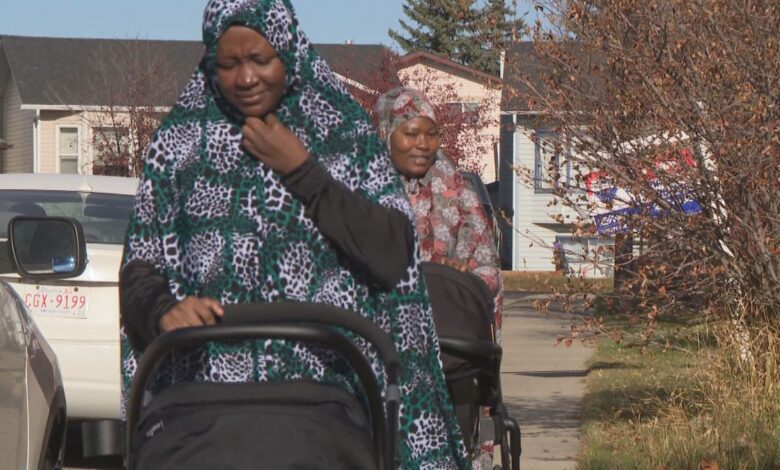
Refugee claimants arriving in Calgary were increasingly entering the homeless-shelter system in 2024, sometimes spending months in facilities not designed for long-term settlement. Newcomer organizations said many people arrived with little money, no local network and immediate needs for housing, legal guidance, health care and employment support.
Arrival with almost no resources
Khairiya Abdul-Mumin said she fled Ghana and reached Calgary with about $50. With nowhere to stay, she used the money to travel from the airport to a shelter and remained there for three months.
She learned she was pregnant after arriving and described repeated illness and hospital visits while living in the shelter. Nawal Abdulkarim, another claimant from Ghana who was also pregnant, said she struggled to find people who could explain where to obtain help.
Why claimants can become homeless
A person who makes a refugee claim at a port of entry is not the same as a government-assisted refugee arriving through a resettlement programme with organized reception support. Claimants must establish that they need Canada’s protection through an immigration process that can take time.
While a claim is pending, delays in work authorization, identification, income assistance, child care and housing can compound. Calgary’s low vacancy rate and high rents made a private lease particularly difficult for someone without Canadian credit, references or a deposit.
Pressure on emergency shelters
Kelly Ernst of the Centre for Newcomers said it was not unusual for people to travel directly from the airport to the organization or a shelter. Existing homelessness services were already serving local residents with complex needs and limited beds.
Using emergency mats for months is expensive and unstable. It also makes it harder to keep documents secure, attend appointments, recover from trauma, manage pregnancy or establish routines for children.
People fleeing anti-LGBTQ persecution
Abdul-Mumin and Abdulkarim said they faced danger because of anti-LGBTQ persecution in Ghana. Their accounts were personal claims subject to Canada’s refugee determination process, but the risks they described explained why returning home was not a simple fallback.
The Centre for Newcomers reported a large increase in LGBTQ clients over several years. Services for this population need confidentiality and cultural competence because disclosure can create danger from relatives, other residents or community members.
Community support changed the situation
Hands Lifting Hearts, a Calgary non-profit supporting expectant African mothers, helped the women with housing, food, clothing and supplies. Volunteers also provided support around childbirth.
That intervention showed the value of community networks, but essential settlement and maternal-health support should not depend entirely on volunteers discovering a crisis in time.
What governments can do
Federal authorities control refugee processing and work permits, while provinces and municipalities fund many housing, health and social services. Fragmented responsibility can leave claimants moving between agencies that each address only part of the problem.
Short-term reception housing with case management can be safer and less disruptive than prolonged shelter stays. Faster document processing, interpretation, legal information and pathways to employment help people become self-supporting without prejudging their claim.
A fair public discussion
Reporting should neither blame newcomers for a housing shortage nor pretend additional arrivals require no resources. Communities need transparent numbers, adequate funding and plans that protect refugee claimants and people already experiencing homelessness.
Abdul-Mumin and Abdulkarim eventually moved out of shelter and began rebuilding with support. Their experience shows the gap between reaching physical safety and achieving stability. Canada’s protection system is credible only when the period between those two points is humane, organized and accountable.