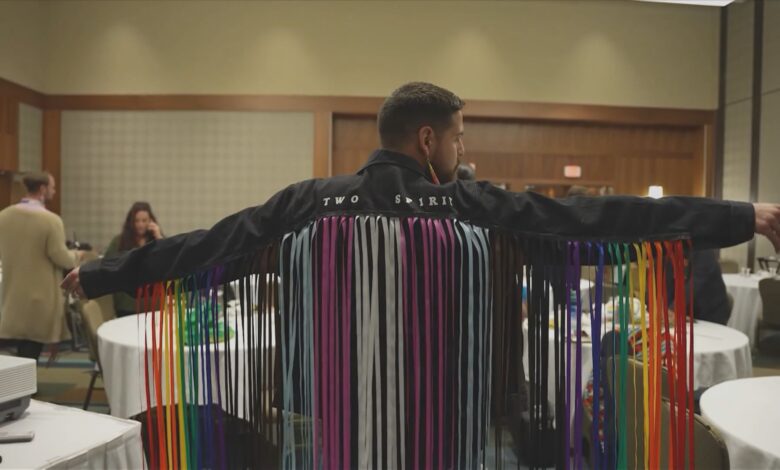
Jordy Ironstar was profiled by Global News’ Shaping Saskatchewan series in October 2024 for grassroots education and advocacy supporting Indigenous kinship and 2SLGBTQIA+ inclusion. Ironstar described growth and belonging as connected goals built through sustained community work rather than a single campaign.
Seven years of community focus
At the time of the profile, Ironstar had spent about seven years working at the intersection of Indigenous identity, relationships and gender and sexual diversity. The work centred people whose experiences can be misunderstood when Indigenous and queer identities are discussed separately.
A profile can recognize contribution without claiming to speak for every community. Indigenous nations have distinct cultures and languages, and people represented by the 2SLGBTQIA+ acronym do not share one experience or political view.
What Indigenous kinship can mean
Kinship is broader than a narrow household chart. It can include extended family, chosen family, community responsibilities, ancestors and relationships to land. Colonial policies disrupted many of those systems through displacement, residential schools and the removal of children.
Community education can help people understand that restoring kinship is not nostalgia. It can shape practical questions about care, ceremony, accountability, youth support and who has a place in community life.
Why Two-Spirit comes first
The “2S” at the beginning of 2SLGBTQIA+ refers to Two-Spirit, a contemporary pan-Indigenous term used by some Indigenous people whose gender, sexuality or community roles connect with their cultural identity. It should not be assigned to someone who does not claim it.
Placing 2S first in a Canadian context recognizes Indigenous people and the effects of colonization. It does not erase lesbian, gay, bisexual, transgender, queer, intersex, asexual or other identities included in the wider acronym.
Education at a grassroots level
Grassroots advocacy often happens through conversations, peer support, workshops, cultural gatherings and help navigating services. Its impact may be less visible than legislation but immediate for a young person looking for safety or an elder seeking respectful information.
Good education makes room for questions while setting limits on harassment. It explains terminology, corrects stereotypes and directs people to local knowledge rather than treating one speaker as a universal authority.
Inclusion requires material support
Celebratory language is not enough if people cannot find safe housing, health care, education or protection from violence. Indigenous 2SLGBTQIA+ people may encounter racism in queer spaces and homophobia or transphobia in other settings.
Organizations can respond with confidential services, trained staff, accessible complaint processes and funding for community-led programmes. Consultation should be paid and should influence decisions rather than merely validate a plan made elsewhere.
Growth without losing accountability
Ironstar’s emphasis on growth can apply to individuals and institutions. Learning may require acknowledging harm, changing language and giving up practices that exclude people.
It also requires humility from advocates and allies. Privacy, consent and community protocols matter when sharing personal stories, particularly in small communities where someone can be identified indirectly.
Why this work shapes Saskatchewan
Saskatchewan’s future is shaped not only by prominent office-holders but by people building safer relationships locally. Ironstar’s work highlighted how education can turn inclusion from an abstract value into daily practice.
The durable measure is whether people feel they belong, can obtain help and have power in decisions affecting them. A short television profile introduced that work; the deeper story is the patient, repeated labour of strengthening kinship without asking anyone to divide parts of who they are.