Alyson Bear, then third vice-chief of the Federation of Sovereign Indigenous Nations, announced in September 2024 that she would challenge incumbent Bobby Cameron for the organization’s top elected position. Supporters presented her campaign as an effort to restore unity, accountability and focus on treaty rights.
The FSIN represents 74 First Nations
The federation advocates for member nations in Saskatchewan while chiefs and communities retain their own authority. Its chief speaks on treaty, political and social issues but does not replace the governments of those nations.
That distinction is essential when describing the office’s reach.
Bear entered with executive experience
She had served as third vice-chief and held a law degree. Supporters pointed to her work helping Indigenous families understand legal processes, including relatives navigating missing-person cases.
Experience was a campaign argument, not proof that every member nation endorsed her.
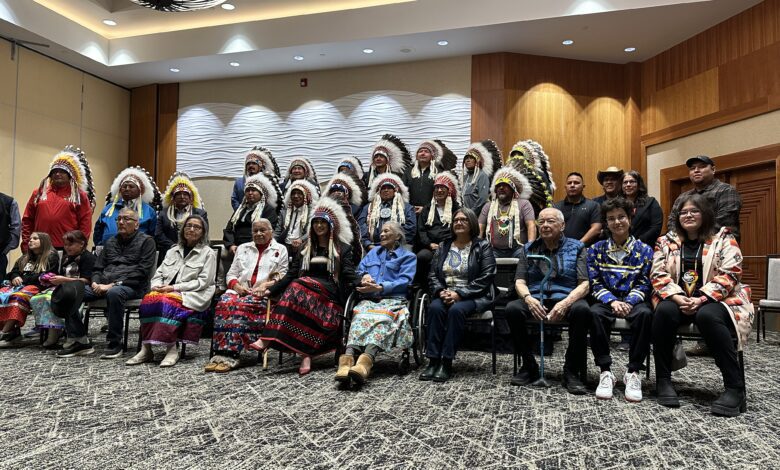
Nearly 20 chiefs appeared at the announcement
Pasqua First Nation Chief Matthew Peigan nominated Bear and argued that the federation needed renewed leadership. Bear promised a standard of ethical accountability and continued defence of inherent and treaty rights.
Public endorsements demonstrated organized support while the formal vote still belonged to eligible delegates.
The incumbent sought another term
Bobby Cameron had led the FSIN since 2015 and campaigned on his record. A competitive election allowed delegates to compare continuity with Bear’s argument for a reset.
Reports should state each candidate’s claims as claims and seek evidence about governance, finances and outcomes.
A victory would have been historic
Bear said she would be the first woman elected chief of the FSIN. Representation mattered, but her platform also asked voters to judge policy, institutional trust and the relationship between the executive and chiefs.
Identity should neither substitute for scrutiny nor be treated as irrelevant in an organization shaped by colonial exclusion.
The election followed FSIN rules
The candidate package set nomination and election procedures, with delegates voting at the October 31 Chiefs Assembly. Internal disputes about eligibility and governance intensified public interest.
Accurate coverage needed the official rules and results rather than rumours circulating during the campaign.
Cameron ultimately won
Delegates re-elected Cameron for a fourth term on October 31, 2024. Reported results gave him 765 votes to Bear’s 258.
Adding that later outcome completes the record without rewriting the fact that Bear’s September announcement opened a real contest.
The campaign raised issues that survived the vote
Accountability, unity and enforcement of treaty rights were not resolved by the count. The winner remained responsible to member chiefs, while Bear and her supporters continued to represent a significant call for institutional change.
The most useful assessment would examine audited governance, consultation with all 74 nations and concrete advocacy results during the term. Election stories can capture declarations and personalities, but Indigenous political institutions deserve the same follow-through applied to other governments. Bear’s candidacy mattered both as a leadership challenge and as a public test of how the federation would debate and answer demands for reform.
Coverage should continue to centre the federation’s own constitutional processes and the voices of member nations, rather than frame the contest through provincial or federal party politics. That respects both the office being elected and the diverse mandates its chief must represent.