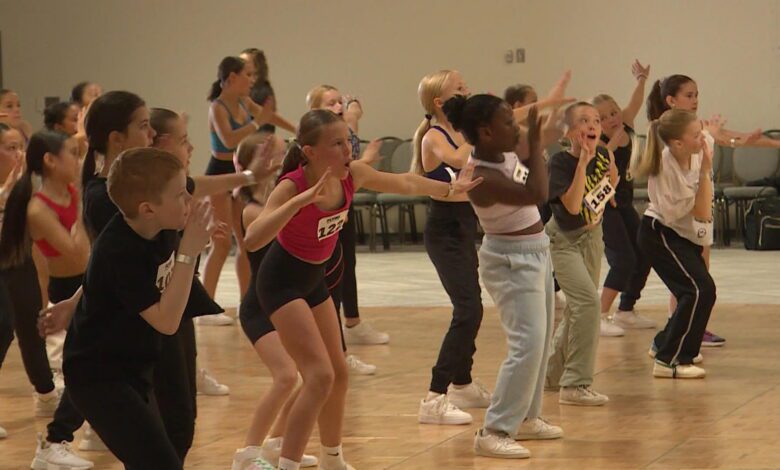
More than 130 young dancers attended the first FORM Dance Convention in Winnipeg in October 2024, taking master classes alongside workshops on performance psychology, nutrition and physical conditioning. The two-day event was created by 21-year-old local dancer and entrepreneur Brynne Abgrall.
A long-held idea becomes an event
Abgrall had danced competitively since age four and said she had wanted to create a local convention for years. Encouragement from a university professor helped turn the idea into an organized programme for dancers aged eight to 19.
Large dance conventions frequently require Winnipeg families to travel. Bringing instructors to the city reduced that barrier and allowed recreational as well as competitive dancers to take part in an intensive weekend.
Professional instruction
Five professional dancers from Los Angeles and Utah travelled to teach different styles. Faculty member Jordan Clark said she valued the opportunity to help younger dancers progress.
Visiting professionals can expose students to unfamiliar movement vocabulary, rehearsal methods and career expectations. A short convention cannot replace regular studio training, but it can challenge habits and give dancers new material to practise with their usual teachers.
More than choreography
FORM combined technique classes with education about nutrition, conditioning and performance psychology. That broader design recognized that dancers are athletes and artists whose health affects both expression and longevity.
Responsible instruction should discourage restrictive eating, training through injury and the idea that one body type defines success. Nutrition guidance needs qualified expertise, while conditioning should be appropriate to a participant’s age and development.
A student’s perspective
Twelve-year-old Juliette Joachim said she hoped to leave as a stronger dancer and improve how she expressed different qualities of movement—for example, smoother phrasing in lyrical work and sharper execution in hip-hop.
Her goal illustrated a useful measure of a convention’s value. Progress is not only about learning more steps; it can include control, musicality, confidence, safe technique and an ability to communicate an idea.
Access and safeguarding
Youth events need clear supervision, emergency plans, consent procedures and rules for photography and changing areas. Organizers should also make schedules and facilities accessible to dancers with disabilities wherever possible.
Cost is another barrier. Registration, shoes, clothing and travel can exclude talented young people, so scholarships and community partnerships can determine whether an event broadens opportunity or serves only families already able to pay.
Building a Winnipeg network
A local convention lets dancers from different studios learn together without turning every encounter into a competition. Teachers can exchange ideas, families can discover programmes, and visiting faculty can see the depth of talent in the region.
For Winnipeg’s creative economy, the event also directs spending to venues, technicians and local services. Sustainable growth depends on transparent registration, reliable scheduling and fair treatment of instructors rather than expansion for its own sake.
Plans beyond the first weekend
Abgrall said Winnipeg was the immediate priority but hoped eventually to take FORM to another Canadian city and, over time, every province. Ambition after a successful launch is understandable, though the first event’s participant feedback and finances should guide any next step.
The convention’s strongest feature was its combination of high-level dance training and practical health education. If future editions preserve that balance, strengthen access and keep youth safety central, FORM could become a meaningful Canadian platform rather than simply another touring competition.