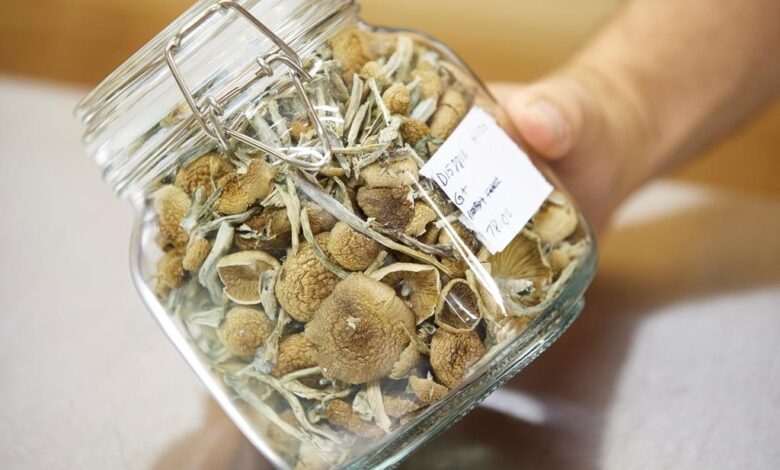
A Quebec religious non-profit asked the Federal Court in October 2024 to compel Health Canada to decide whether its members could receive an exemption to use psilocybin mushrooms during ceremonies. Gratitude Sanctuary said the long wait prevented members from practising what it described as a sincere religious belief safely and legally.
The exemption request
The organization, known in French as Sanctuaire de la Gratitude, and its Reverend Superior Alain Menier said members received personal teachings in a sacred space opened by consuming psilocybin mushrooms. Menier first approached Health Canada in January 2022.
The group said the department later sent two questionnaires containing 41 questions but had not made a decision. Its court filing sought an order requiring the minister to grant or refuse the application or identify missing information.
What the lawsuit did not decide
Filing an application does not establish a right to possess or consume psilocybin. It sets out the applicants’ allegations and requested remedy, which the government can answer and a court can assess.
The group was asking for a decision, not asking the court report itself to issue a blanket drug authorization. A judicial order about delay can be different from a ruling on the substance of an exemption.
Canada’s controlled-drug framework
Psilocybin is controlled under federal law. Health Canada can consider exemptions for specified medical, scientific or public-interest purposes under the Controlled Drugs and Substances Act, and courts can review administrative decisions for legality and fairness.
Religious-freedom claims engage the Canadian Charter, but freedom of religion is not necessarily absolute. Government restrictions can be defended if lawfully prescribed and demonstrably justified, with the analysis depending on evidence and proportionality.
Safety questions
Psilocybin can alter perception, emotion and judgment. Risks can include panic, confusion, unsafe behaviour and interactions with a person’s psychiatric condition or medicines. Potency and contaminants are additional concerns outside regulated supply.
A credible exemption process can examine screening, informed consent, dose control, supervision, emergency procedures, storage and exclusion criteria. Calling a use ceremonial does not eliminate those safety responsibilities.
Religious sincerity and government neutrality
Officials should not decide whether a belief is theologically conventional or popular. They may need to assess whether a claimed practice is sincerely connected to religion and how an exemption would affect health and enforcement objectives.
The same rules should be applied without favouring established religions over new or unfamiliar ones. Detailed questions can be legitimate, while indefinite delay can itself burden a protected practice.
Medical research is a separate issue
Clinical research into psilocybin-assisted therapy does not automatically prove that unsupervised or ceremonial use is safe, and a religious exemption is not a medical approval. Each context has different safeguards and legal purposes.
People should not treat the lawsuit as advice to buy mushrooms from an illegal retailer or to self-medicate. Anyone seeking treatment should consult a qualified clinician and current official guidance.
The accountability question
Health Canada needed enough evidence to make a careful decision, but applicants were entitled to a process that moved within a reasonable time. A written decision would allow the group to understand the result and use available appeal or review mechanisms.
The case therefore concerned both religious liberty and administrative responsibility. The safest resolution was a reasoned, evidence-based decision with enforceable conditions if granted—not silence, speculation or an assumption that sincerity alone settled every public-health question.