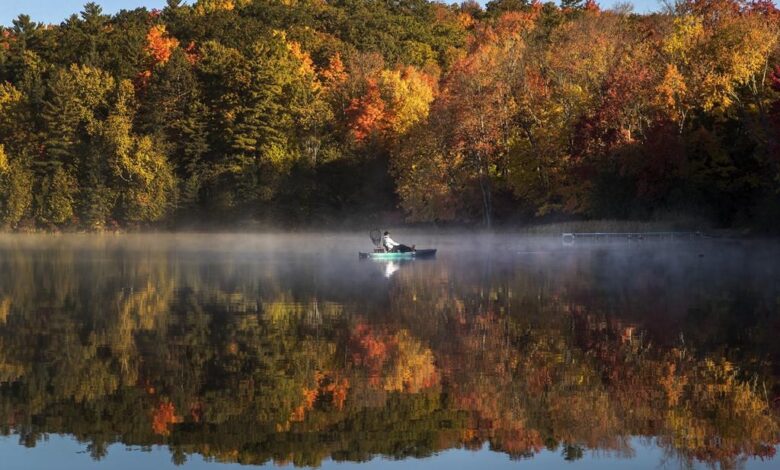
Fall colour appeared less vivid in parts of Ontario, including the Greater Toronto Area, after unusually warm conditions in September 2024. Plant scientists said temperature was one influence on the display, alongside day length, sunlight, rainfall, tree species and the health of individual leaves.
How leaves change colour
As autumn days shorten, deciduous trees begin shutting down chlorophyll production and preparing to shed their leaves. The loss of green chlorophyll reveals yellow and orange pigments called carotenoids that were already present in the leaf.
Red and purple colours are produced by anthocyanins, which some species create in autumn. Bright sunny days followed by cool—but not freezing—nights can favour their development by trapping sugars in the leaf. A hard freeze, severe drought or early storm can shorten the display by damaging leaves or bringing them down.
Why warm nights matter
McMaster University biologist Susan Dudley said the most vivid conditions usually combine sunlight with nights near one or two degrees Celsius. September in southern Ontario had instead brought persistent warmth, including overnight temperatures that delayed or softened parts of the normal transition.
University of Toronto forest ecologist Sean Thomas likewise cautioned that weather affects timing and intensity. Trees in northern and cooler areas could show stronger colour while a warmer urban region lagged, even within the same province.
There is no single provincial schedule
Maples, oaks, aspens and other species do not turn at the same time or produce the same pigments. Elevation, soil moisture, shade and the urban heat-island effect create local differences, so one dull neighbourhood does not prove that Ontario as a whole had a poor season.
A colder spell could still improve colour in leaves that remained healthy and attached, but it could not restart the biological process once they had browned or fallen. Forecasts were therefore most useful as short-term guides rather than guarantees of a precise peak date.
Stress can dull the display
Too little water may cause leaf edges to brown or leaves to drop early. Excessive moisture and disease can also reduce leaf quality. Weather earlier in the growing season matters because a tree enters autumn with the effects of summer heat, pests and moisture already recorded in its canopy.
Homeowners should not assume that muted colour alone means a tree is dying. Persistent dieback, abnormal leaf loss across several seasons or damage to branches and bark is more appropriately assessed by a qualified arborist.
What climate change may alter
Warmer autumns can delay colour change, while more frequent heat, drought or intense storms can affect pigment production and how long leaves remain on trees. Researchers expect climate change to alter the timing and reliability of fall displays, but the outcome will vary by species and location.
It would be too simple to attribute one season or one dull canopy solely to climate change. Long-term trends are established from repeated observations, while the colours seen in a particular week reflect a combination of climate, that year’s weather and local growing conditions.
A better way to read the season
Visitors looking for peak colour could compare provincial reports with recent local photographs, check conditions at the destination and remain flexible about timing. Staying on trails and avoiding damage to roadside vegetation protects the very landscapes people travel to see.
The subdued GTA display in 2024 was scientifically plausible after a warm September, but it was not a uniform failure of autumn. Leaf colour is a living response, not a fixed calendar event, and its variation provides visible evidence of how trees respond to light, temperature, water and stress.