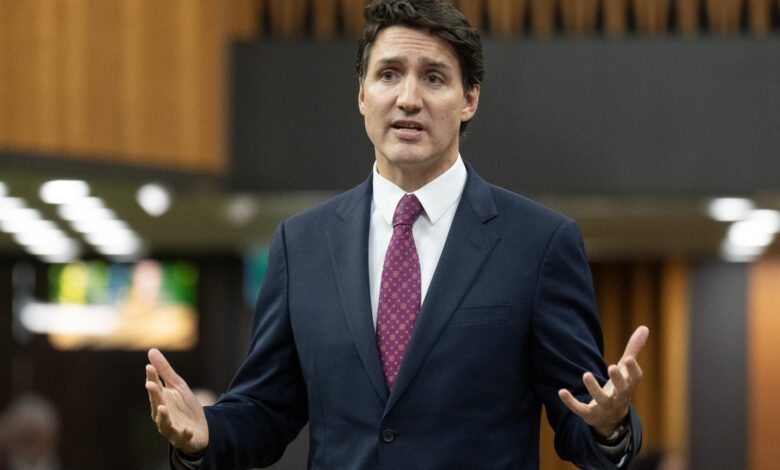
Prime Minister Justin Trudeau faced an organized challenge from members of his Liberal caucus at a closed-door meeting on October 23, 2024. Sources said between 20 and 30 MPs had supported an internal document asking him to step aside as party leader amid weak polling and concern about the next federal election.
What the dissenting MPs sought
The group wanted Trudeau to consider whether the party would have a better electoral chance under new leadership. Twenty-four MPs ultimately signed a letter calling for his resignation and set October 28 as a deadline for a response.
A caucus letter carries political weight but is not automatically a legal mechanism to remove a leader. The Liberal Party’s rules did not give MPs a simple binding confidence vote comparable to procedures used in some parliamentary parties.
Cabinet support before the meeting
Several ministers publicly backed Trudeau. Women and Gender Equality Minister Marci Ien said she supported him unequivocally, while Employment Minister Randy Boissonnault described the dispute as a distracting internal drama.
Cabinet solidarity did not prove that the broader caucus was unanimous. Conversely, anonymous reports of dissent did not establish that most Liberal MPs wanted a change. Both the size and influence of the group required careful attribution.
Inside and after caucus
MPs aired concerns during the meeting. Trudeau emerged saying the party was strong and united, while other members described a constructive but candid discussion. Those public phrases did not resolve the disagreement; caucus confidentiality limited independent verification of individual exchanges.
Liberal MP Nathaniel Erskine-Smith said colleagues had valid frustrations and that rebuilding trust required changes. That position acknowledged dissent without treating it as a completed leadership removal.
Why the challenge emerged
The Liberals had trailed the Conservatives in national polling for more than a year, and MPs worried about losing their seats. Internal critics also raised concerns about communications, policy and the government’s response to affordability pressures.
Polls are estimates rather than election results. Their value lies in trends across credible surveys, not treating one release as a precise forecast for every riding.
Trudeau’s immediate decision
On October 24, Trudeau said he intended to remain leader and lead the party into the next election. The caucus deadline passed without the requested resignation, and some MPs called for a secret ballot to clarify support.
His choice showed the limit of the internal challenge at that moment. It did not mean the political pressures had disappeared.
Later events changed the leadership
Trudeau announced in January 2025 that he would resign after the party selected a successor. Mark Carney won the Liberal leadership in March and became prime minister. Those later events should not be written back into October as if the caucus confrontation immediately forced an exit.
Leadership changes arise from accumulated political, personal and parliamentary factors. A direct causal claim requires evidence beyond chronological sequence.
The democratic issue
Party leaders hold significant power over nominations, campaign strategy and the executive. MPs also have a duty to represent constituents and raise concerns about whether leadership remains effective.
The October meeting exposed tension between public unity and internal accountability. Accurate coverage needed to report the challenge, the cabinet’s support and the absence of a binding removal process. It was a serious warning to Trudeau, not a completed transfer of power.