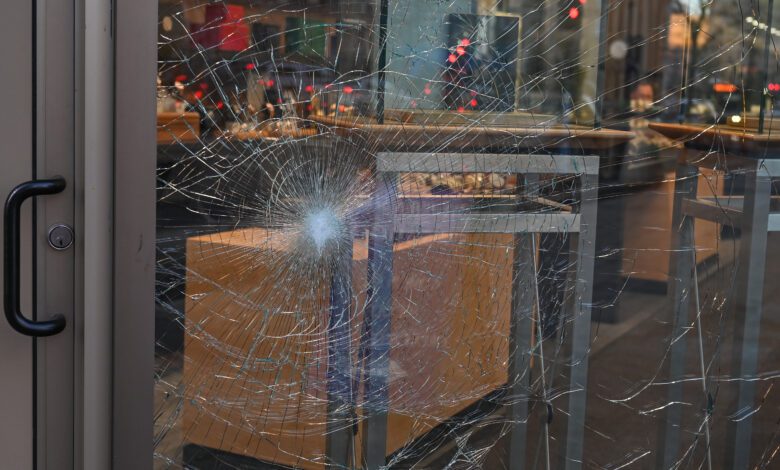
A Canadian Federation of Independent Business survey released in October 2024 found that 45 per cent of participating small businesses had been directly affected by crime or community-safety problems during the preceding year. That was up from 24 per cent in the federation’s previous survey and reflected costs that owners said were becoming difficult to absorb.
What businesses reported
Among affected respondents, 63 per cent cited vandalism or break-and-enter, 60 per cent cited theft or shoplifting and 63 per cent reported community-safety issues such as waste or litter. The categories can overlap, so they should not be added together as if each represented a different business.
The federation estimated that the median business had spent about $5,000 responding to crime during the previous three years. That figure included direct and preventive costs, but the organization described it as conservative because lost time, reduced customer traffic and emotional stress are difficult to measure.
A survey is not the national crime rate
The findings described the experiences of CFIB survey participants. They did not prove that every type of crime rose by the same amount across Canada. Police-reported data, victimization surveys and business surveys answer different questions and can move in different directions.
Statistics Canada later reported a four-per-cent decline in the overall police-reported crime rate for 2024. That does not invalidate the business survey: a shop may face repeated theft or disorder even while the national rate falls. It does mean the CFIB percentage should not be presented as a substitute for official nationwide crime statistics.
Why incidents go unreported
The federation said 54 per cent of affected businesses reported incidents to police, while only 33 per cent of those reporters were satisfied with the response. Among owners who did not always report, 83 per cent believed doing so would make little difference and 53 per cent cited an inadequate police response.
Low reporting can leave authorities with an incomplete map of repeat locations and offenders. Police services can improve participation by providing simple online reporting, case numbers, follow-up expectations and aggregated information showing how reports inform deployment.
What owners wanted changed
Ninety-two per cent of respondents supported better handling of repeat offenders. That concern often enters political debate about bail and sentencing, but those laws are only part of the system. Evidence, prosecution capacity, court delays, supervision, treatment and housing can all affect whether harmful behaviour continues.
The CFIB and the Canadian Police Association called for coordinated work involving police and courts as well as action on poverty and mental health. A response limited to arrests may displace a problem without reducing its causes; a response limited to social services may fail to protect workers facing an immediate threat.
Practical prevention for small firms
Businesses can document incidents, preserve video lawfully, improve lighting and sightlines, train staff not to physically confront thieves and develop procedures for threats or violence. Insurers and local police can advise on proportionate measures. Expensive barriers that make a shop inaccessible or hostile should not be the default.
Governments can support grants for security improvements, clean public spaces promptly and publish local data about patterns and response times. Any programme should measure whether it reduces harm rather than merely the number of reports.
A balanced response
The survey showed a serious loss of confidence among many small firms, not a licence to exaggerate crime or stigmatize people who are homeless, use drugs or experience mental illness. Effective policy must protect employees and customers, hold offenders accountable through due process and address the conditions that produce repeated crises.
Clear reporting channels, targeted prevention and credible follow-up can rebuild trust. The goal is not only fewer insurance claims; it is a safer commercial street where businesses, workers and vulnerable residents can all function without fear.