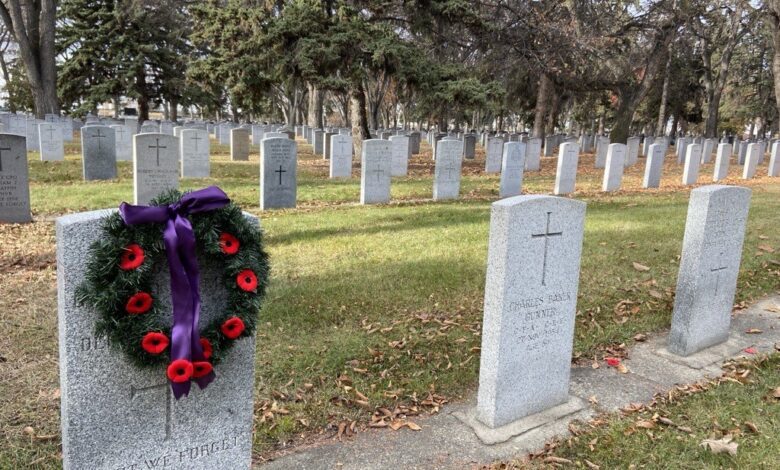
About 600 students joined veterans and other participants at Edmonton’s Beechmount Cemetery for the 14th annual No Stone Left Alone ceremony in November 2024. Together they placed poppies at nearly 4,000 military headstones in the Field of Honour.
A movement that began in Edmonton
Maureen Bianchini-Purvis founded No Stone Left Alone in 2011. Her parents had served Canada during the Second World War, and she wanted every military headstone to receive a poppy at Remembrance Day. The first ceremony took place at Beechmount.
The gesture is intentionally simple. A student approaches a marked grave, reads a name and places a poppy. That individual encounter can make service and death more concrete than a large casualty number.
Growth beyond one cemetery
In 2023, the foundation reported that 11,340 students in 200 communities placed 80,838 poppies during 287 ceremonies. By the following year, the programme had grown to more than 300 ceremonies internationally.
Expansion demonstrates demand but creates responsibilities. Organizers need cemetery permission, accurate grave records, respectful conduct and safe handling of memorial objects. Reported totals should be documented consistently so growth does not become more important than meaning.
Why student participation matters
Most veterans of the First and Second World Wars have died, reducing opportunities for students to hear direct testimony. Cemeteries, archives and recorded oral histories provide other forms of contact with the past.
Children should learn that military service is not one uniform experience. People served in different branches and conflicts, some volunteered and some were conscripted, and Indigenous, Black, Asian and women veterans often faced discrimination before or after service.
Remembrance and inquiry
Placing a poppy can begin a lesson rather than complete it. Students can research a name through service records, local newspapers and family histories, then distinguish confirmed facts from assumptions. Teachers should discuss civilian loss and the decisions that produced wars as well as courage and sacrifice.
Respect for veterans does not require uncritical support for every military action. Democratic societies can honour people who served while debating policy, strategy and government accountability.
Care at gravesites
Cemeteries are places of mourning as well as education. Participants should follow rules, avoid damaging markers and give families privacy. Photographs of children or personal inscriptions require appropriate consent and sensitivity.
Bianchini-Purvis said the act was powerful for serving members, veterans and families unable to visit. That emotional value is real, while no organization can claim to speak for every family’s preferred form of remembrance.
A tradition sustained through knowledge
The 2024 Beechmount gathering filled the cemetery with hundreds of people and then focused their attention on individual stones. Its success came from converting a national observance into careful, personal, informed action.
For the movement to endure, each annual poppy should be accompanied by preservation of the records that explain the name beneath it. Ceremony keeps memory visible; accurate education makes it useful. Together they allow a generation with no living memory of the world wars to approach their consequences with respect, curiosity and critical thought.