
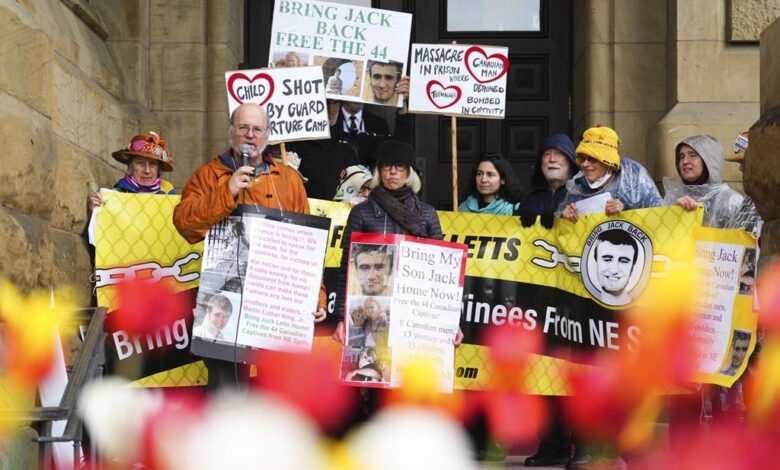
The mother of Canadian detainee Jack Letts said she was exhausted after the Supreme Court of Canada refused in November 2024 to accept a renewed attempt to have his repatriation case heard. The decision closed the file at Canada’s highest court but did not resolve the humanitarian and policy questions surrounding Canadians detained in northeastern Syria.
A long-running detention
Letts was among four Canadian men held without charge or trial in detention facilities run by Kurdish authorities after territorial battles against the Islamic State group. His family said Kurdish forces captured him in 2017 while he was leaving Syria with refugees.
The men’s lawyers described overcrowded, unsanitary conditions, inadequate food and medical attention, and an allegation of torture reported by one applicant. Those descriptions formed part of the legal and public record; access constraints made independent monitoring difficult.
Conflicting Federal Court decisions
In January 2023, Federal Court Justice Henry Brown directed the federal government to request repatriation as soon as reasonably possible and to provide passports or emergency travel documents. The ruling also contemplated a Canadian representative travelling to help transfer the men if their captors agreed.
The Federal Court of Appeal overturned that decision. It held that the federal government was not legally obliged to repatriate the men under the claim advanced in the case. The distinction between a legal duty and a policy choice was therefore decisive.
The attempt to reopen the Supreme Court file
The Supreme Court had already declined to hear an appeal from the appellate ruling. Lawyers filed a fresh notice in March 2024, arguing that exceptionally rare circumstances justified reconsideration.
In a letter dated November 1, the court registrar said the motion could not be accepted because it did not reveal circumstances warranting the extraordinary step. The letter said the file was closed and no further documents would be accepted.
A mother’s response
Sally Lane described the result in stark terms and said she wanted her son home after more than seven years of advocacy. Her statements conveyed a parent’s assessment of danger and governmental failure. They should be reported as her view, not as the court’s language or a formal finding about an imminent outcome.
Letts’ circumstances have attracted intense political labels. Accurate reporting should not let a nickname or untested claim substitute for the documented fact that these men had remained detained for years without a criminal trial in the facilities at issue.
Legal judgment and government responsibility
The Supreme Court’s refusal to hear the case did not order Canada to leave the men in Syria. It meant the appellate ruling stood and that this route did not establish a judicially enforceable duty to repatriate them. The federal government retained responsibility for its diplomatic, security and humanitarian policy choices within Canadian and international law.
Officials could assess identities, evidence, travel documents, prosecution options, risk-management measures and the consent of authorities controlling the camps. Parliament and the public could ask what standards Canada applied consistently to citizens abroad and what oversight existed.
The November 2024 development was a procedural endpoint with profound human consequences. It should be understood precisely: the top court did not conduct a full appeal or pronounce on every factual allegation. It declined reconsideration, leaving the men’s legal victory reversed and their families to pursue political or international avenues.



