
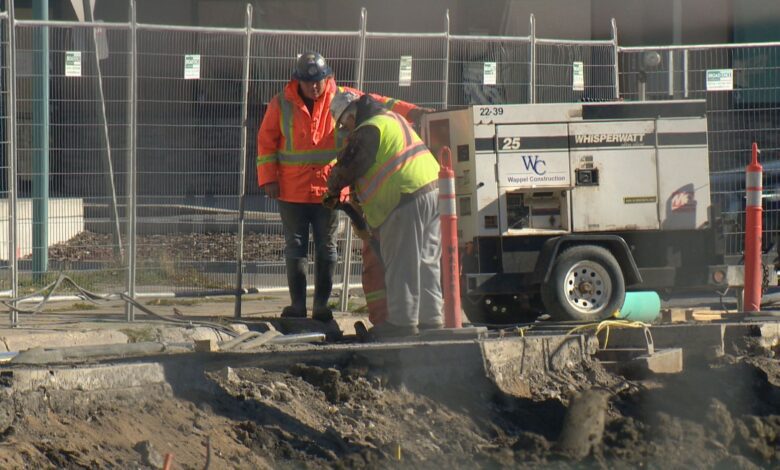
Regina’s aging streets, pipes and public facilities became a central issue in the city’s 2024 municipal election. With voting scheduled for November 13, mayoral candidates were pressed to explain how they would repair existing infrastructure while deciding which new projects the city could afford.
What was at stake
The discussion covered lead service connections, reconstruction of Dewdney Avenue, the pace of road work and the wider cost of maintaining an aging municipal system. These are connected questions: work beneath a road can require excavation, traffic changes and surface replacement, while delaying coordinated repairs can mean reopening the same corridor later.
Infrastructure is not limited to highly visible construction. Water mains, sewers, drainage, sidewalks, bridges and public buildings all require inspection and renewal. Residents generally notice failure before they notice successful preventive maintenance, which can make long-term investment politically difficult.
Promises needed costs and schedules
Candidates brought different ideas to the campaign, but a useful proposal needed more than a list of projects. Voters required an estimated capital cost, a funding source, a construction sequence and an explanation of how operating and maintenance expenses would be covered after completion.
Debt can distribute the cost of a long-lived asset across the residents who will use it. It can also constrain later budgets if interest and repayment obligations grow too quickly. Grants from other levels of government may reduce the local burden, but uncertain grants should not be presented as money already secured.
Repairing old assets or building new ones
Municipal leaders often face a choice between renewing existing systems and launching a prominent new facility. The choice is not always absolute, because growth can require new capacity while neglected assets become more expensive and unreliable.
A defensible plan ranks work by public safety, regulatory obligations, service interruption risk, asset condition and lifecycle cost. It should also explain how neighbourhood equity is considered so that areas with less political influence are not repeatedly left with poorer roads, drainage or accessibility.
Lead service connections
Lead pipes require special attention because exposure can harm health, particularly for children and during pregnancy. Replacement programmes need a reliable inventory of public and private portions, clear testing information and assistance for households that cannot absorb an unexpected cost.
Temporary measures can reduce exposure while replacement is arranged, but they are not a substitute for removing the source. Residents should follow current advice from the city and health authorities rather than assume that water appearance or taste can reveal lead.
Construction speed and public accountability
Complaints about slow work can reflect weak planning, contractor performance, utility conflicts, weather or the technical reality of complex construction. Publishing milestones and reasons for delay allows residents to distinguish unavoidable disruption from preventable mismanagement.
Good reporting should include change orders, final costs and asset-condition results after a project finishes. Announcing a groundbreaking is not the same as delivering a durable asset on budget.
How residents could assess the debate
Eleven candidates were running for mayor, and the City of Regina provided official candidate information. Voters could compare platforms using the same questions: Which problem is being solved? What evidence establishes priority? Who pays, over what period, and what service trade-off follows?
The campaign’s infrastructure debate was valuable because it focused attention on systems that shape daily life long after an election. Fresh ideas mattered, but the strongest commitment was one that joined ambition to engineering evidence, transparent financing and measurable maintenance.



