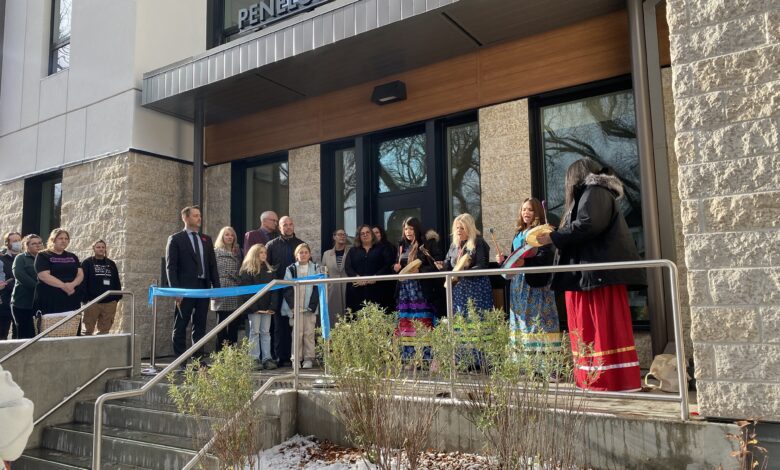
YWCA Regina opened the Kikakihtânaw Centre for Women and Families at 2817 12th Avenue on November 6, 2024. The $70-million facility brought housing and support services under one roof for women and families facing homelessness, violence and other barriers.
A centre designed around stability
YWCA Regina chief executive Melissa Coomber-Bendtsen said residents had moved in about three weeks before the opening and were already gathering and supporting one another differently. The physical environment was intended to offer more than an emergency bed: it created space for community, recovery and longer-term planning.
The building included multipurpose rooms, drop-in supports, communal kitchens, play areas and a healing and ceremony lodge. Combining functions can reduce the burden of travelling between agencies, particularly for parents caring for children or people rebuilding after violence.
A resident’s experience
Tanya Bunnie had lived on the street and moved through shelters before entering the YWCA in January. She said the new centre felt like home and provided a fresh start. After becoming a resident, she began leading beading and ribbon-skirt-making sessions.
Her account showed how a resident can contribute skills rather than be portrayed only as a recipient of help. It remained one person’s experience; a full evaluation should include confidential feedback from many residents, including those who encounter problems.
The meaning of the name
The name Kikakihtânaw conveys an idea of “our home” in Cree. Using an Indigenous name carries responsibility to maintain relationships with Indigenous women, elders and organisations in programme design and governance. Ceremony space should be supported by practice, not treated as a decorative feature.
Indigenous women face disproportionate violence and housing insecurity shaped by colonial policy and continuing discrimination. Services should be culturally safe while remaining available to women and families from varied backgrounds.
How the project was financed
The facility was funded by individual donors, community partners and all levels of government. Earlier project announcements identified substantial federal support, a provincial contribution, city-donated land and YWCA fundraising. The final reported cost of $70 million exceeded the earlier $60-million project estimate, making transparent capital and operating accounts important.
Constructing a building solves only part of the problem. Staffing, maintenance, security, childcare, counselling and housing navigation require recurring funds. An opening-day investment is successful only if services remain dependable after public attention moves on.
Safety without institutional isolation
Women fleeing violence may need confidential locations, controlled access and legal or health support. They also need autonomy, privacy and pathways to permanent housing. Rules should be trauma-informed and avoid recreating unnecessary control in the name of safety.
Families require spaces and routines appropriate for children, whose education and emotional needs can be disrupted by displacement. Coordinated services can reduce repeated retelling of traumatic experiences, provided information is shared only with informed consent.
Measuring whether hope becomes an outcome
Coomber-Bendtsen described seeing a new sense of possibility among residents. Over time, the centre can report occupancy, wait times, transitions to stable housing, repeat homelessness and resident-defined well-being while protecting identities.
Kikakihtânaw’s opening represented a substantial community commitment and an immediate improvement in the environment available to residents like Bunnie. Its lasting value would be measured not by the scale of the building alone, but by whether women and families gained safety, choice, cultural belonging and durable homes.