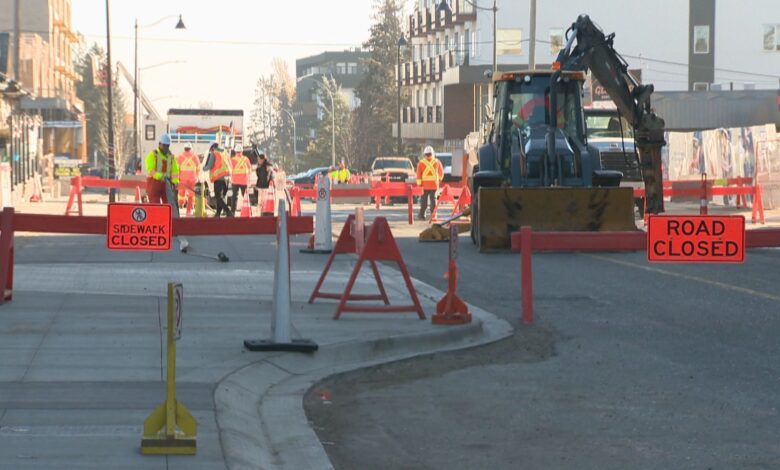
Businesses on 33rd Avenue S.W. in Calgary’s Marda Loop faced an emergency water shutdown on November 1, 2024, after a break in a cast-iron main installed in 1948. The interruption followed nearly two years of nearby construction and left water-dependent operators scrambling to change appointments and services.
Short notice for businesses
City officials delivered notices late Thursday afternoon saying water would be turned off at 6:30 a.m. Friday. Jodie Tilley, co-founder of Phi Beauty Aesthetics, said her clinic expected about 40 patients and could not normally operate its services or washrooms without water.
The notice did not initially explain the reason, adding uncertainty to an already difficult adjustment. Restaurants, clinics and personal-service businesses can face sanitation rules that make improvisation impossible even if staff and customers are willing.
Why the city did not shut the main immediately
Calgary drinking-water distribution manager Chris Huston said crews first controlled the damaged main so businesses could retain service while traffic controls and repair teams were organized. That decision provided roughly 14 hours of warning.
The city described the break as one of about 300 water-main emergencies it handled annually. Emergency work differs from planned maintenance because the precise location, extent and repair time may not be known when the first notice is issued.
Why a temporary supply was not used
During scheduled repairs, Calgary can sometimes provide a temporary feed from nearby fire hydrants. In this case, officials said testing the safety of that water arrangement would take nearly as long as repairing the main itself.
Water service cannot be restored or redirected solely for convenience without ensuring quality and pressure. A temporary solution that introduces contamination or weakens fire protection could create a greater hazard.
Construction fatigue in Marda Loop
Business owners had already dealt with access changes, digging and customer disruption from long-running area construction. An unrelated emergency can be more damaging when it arrives after months of reduced foot traffic and operational uncertainty.
Cumulative impact should be considered in municipal planning. Clear signs, pedestrian access, loading arrangements, marketing support and coordinated schedules can reduce harm even when the construction itself is necessary.
Communication lessons
Emergency notices should state the cause when known, affected addresses, expected duration, water-safety instructions and a reliable update channel. Businesses need to know whether toilets, handwashing and food preparation may continue and what to do after service returns.
When the end time is uncertain, scheduled update intervals are more useful than silence. The city can later publish the repair outcome and whether the pipe’s condition changes priorities for nearby renewal.
Infrastructure beyond the single break
A 1948 main reaching failure does not prove every pipe of the same age will fail, but age, material, break history, soil and consequence of failure should guide replacement plans. Preventive renewal can reduce emergencies but requires capital and causes planned disruption of its own.
The Marda Loop shutdown illustrated the cost of aging infrastructure at street level: cancelled services, inaccessible washrooms and another obstacle for businesses already surrounded by construction. A credible municipal response combined rapid repair with timely information and a long-term asset plan that reduced the chance of recurrence.