
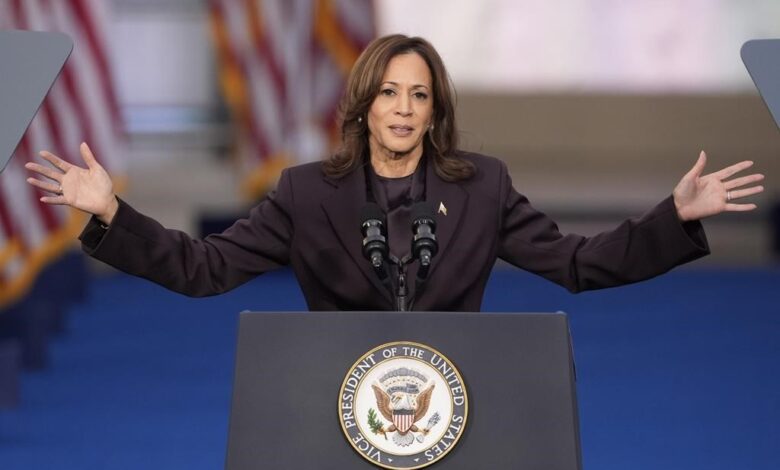
Students at Westmount High School in Montreal reacted with disappointment after Kamala Harris lost the 2024 U.S. presidential election, while expressing pride in an alumna who had become vice-president and a major-party presidential nominee. Some hoped she would seek the presidency again in 2028.
Harris’s Montreal years
Harris moved to Montreal as a teenager when her mother, breast-cancer researcher Shyamala Gopalan, took a position at the Lady Davis Institute of the Jewish General Hospital. After initially attending a French-language school, Harris spent three years at Westmount and graduated in 1981.
That connection gave students a local point of entry into an American election. It did not make Harris a Canadian politician or give Canadian students a vote in the result, but it allowed them to see a person from their school’s history reach one of the world’s most visible offices.
Student responses
Fourteen-year-old Kadiatou Barrie said she believed Harris was what the United States needed but respected the voters’ decision. She described Harris as an inspiration for young girls. Fellow student Aminata Diallo said staff and students had discussed the result throughout the day and hoped Harris would run again.
Their comments were personal reactions, not a representative survey of the entire school. Students can disagree about politics, and a newsroom should not turn two interviews into a claim of unanimous opinion.
Pride and democratic acceptance
Admiration for an alumna can coexist with acceptance of a lawful election outcome. Barrie’s response reflected that distinction. Democratic engagement includes supporting a candidate, evaluating verified results and continuing political participation after a loss.
At the time, Harris’s concession urged supporters not to despair and to continue working for their goals. Whether she should run in another election would depend on her decision, party voters and future circumstances—not on an automatic entitlement created by a previous nomination.
A school’s role in political discussion
Westmount’s connection to Harris can support lessons about government, media literacy, civil rights and the differences between Canadian and American elections. Educators should create space for disagreement and prevent political discussion from becoming harassment.
The English Montreal School Board had celebrated Harris’s 2020 election as vice-president, including a photograph of students with congratulatory signs. Recognizing an alumna’s achievement is compatible with teaching students to scrutinize her policies and record.
Representation without reducing identity to symbolism
Harris’s career carried significance for many Black and South Asian women and girls. Representation can expand a young person’s sense of what is possible, while no officeholder represents every view within an identity group. Meaningful civic education combines symbolic milestones with assessment of decisions and outcomes.
Students quoted in the report were minors. Their views deserved the same accuracy and context as adult political commentary, along with care about consent and online exposure. Their disappointment should not be mocked, nor exaggerated into a mental-health claim.
The story at Westmount was ultimately about how global events enter local institutions. Hallways Harris had walked decades earlier became a place where another generation discussed power, defeat and possibility. The students’ hope for a future campaign was speculative, but their pride was a real expression of how personal history can make distant politics feel immediate.



