Canada’s federal labour minister moved on November 12, 2024, to end shutdowns affecting ports in British Columbia and Montréal by directing the Canada Industrial Relations Board to order operations to resume and send unresolved contract issues to binding arbitration.
Labour Minister Steven MacKinnon used section 107 of the Canada Labour Code after mediation failed. The intervention covered a lockout of ship and dock foremen at West Coast ports and a separate longshore dispute at the Port of Montréal.
What had stopped at the ports
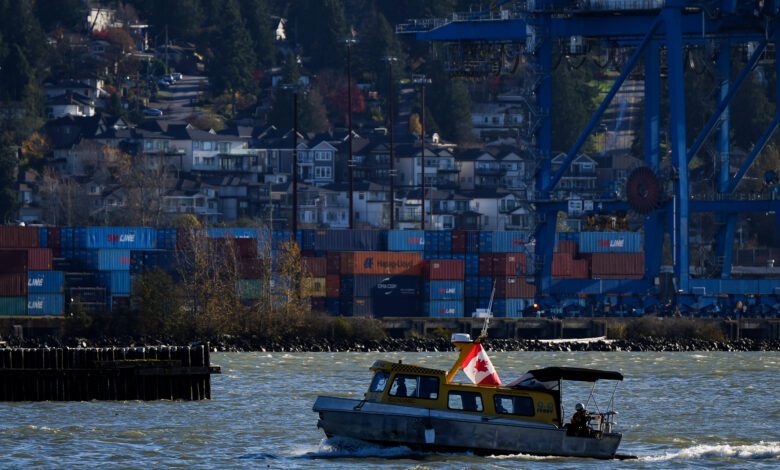
The British Columbia Maritime Employers Association began an industry-wide lockout on November 4 after International Longshore and Warehouse Union Local 514 issued notice of targeted job action. Container and other cargo operations were disrupted at major West Coast gateways, including Vancouver and Prince Rupert, although statutory rules treated bulk grain differently.
In Montréal, members of CUPE Local 375 had already held a 72-hour strike at two Termont terminals and began an unlimited strike at those terminals on October 31. The disputes involved different unions, employers and bargaining issues even though Ottawa addressed them at the same time.
What Ottawa directed the labour board to do
Section 107 allows the minister to refer questions to the federal labour board and direct measures intended to maintain or secure industrial peace. MacKinnon asked the board to order the parties back to their operations and duties and to impose final and binding arbitration where negotiations had not produced agreements.
The board issued a West Coast order on November 13 requiring operations to resume on November 14 while it dealt with the referral. Binding arbitration means an arbitrator determines unresolved terms after hearing the parties. It ends the immediate work stoppage but does not mean workers and employers voluntarily agreed on every contract provision.
Why the government intervened
Ports are central to Canadian imports and exports, and the shutdown affected manufacturers, retailers and agricultural shippers. Government briefing material later recorded that containerised grain movements stopped and that hundreds of refrigerated containers were at risk, while employers warned about wider supply-chain costs.
Economic impact was the government’s reason for acting, but it did not settle the legal and labour-policy debate. Unions argued that compulsory arbitration weakened constitutionally protected collective bargaining and announced court challenges. Employers emphasised the cost and uncertainty created by prolonged disruption.
Questions raised by repeated intervention
An industrial inquiry into West Coast port relations later noted that federal intervention had repeatedly influenced bargaining behaviour. Its report recommended a structured special-mediator process that could give government better independent information before a crisis and help the parties reach a settlement through bargaining.
The 2024 order should therefore be described narrowly. It restored operations and shifted outstanding issues to arbitration; it did not prove that one side caused the entire dispute, erase the unions’ legal challenges or create a permanent solution to instability at Canadian ports.
Readers following a later port dispute should check the parties, bargaining unit and dates. A headline about “the ports” can wrongly suggest that every terminal in Canada has stopped or that an order in one bargaining round automatically controls another.
Sources: Government of Canada Industrial Inquiry Commission report; federal labour briefing material on the November 2024 referrals.