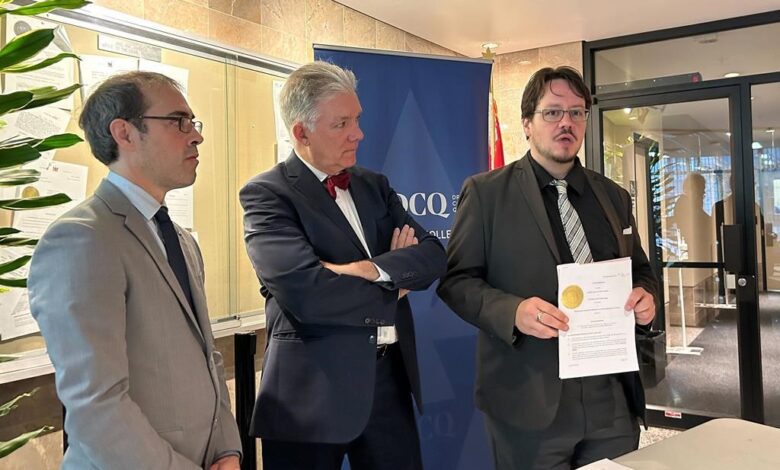
A Quebec civil-liberties group criticised the Supreme Court of Canada in November 2024 after the Court removed thousands of older, unilingual judgments from its website while it considered how to comply with official-language requirements.
Droits collectifs Québec said removing the decisions did not resolve its complaint and intended to continue seeking a ruling in Federal Court. The dispute concerned public access and translation of historical judgments, not the deletion of modern bilingual decisions from the legal record.
Why older rulings were available in one language
The Supreme Court was established in 1875. Before the Official Languages Act took effect in 1970, it was not legally required to issue every judgment in both English and French. Some historical rulings were written only in English, some only in French and others in both languages.
Since 1970, the Registrar’s office has ensured that new judgments are rendered in both official languages. In 2019, the Court expanded its own online collection to include judgments from its entire history, which exposed the older language gap on a modern government website.
The commissioner’s finding and the Court’s response
Canada’s Commissioner of Official Languages concluded in September 2024 that decisions published on the Supreme Court website had to be available in both official languages. On November 8, the Court announced that only translated judgments would remain accessible through its site while it worked on historical translations.
The Court said the unilingual rulings remained available through public legal databases. That preserved practical access for many researchers, but the Quebec group argued that redirecting users elsewhere did not satisfy the equality and accessibility issue raised by publication on the Court’s own site.
Translation is more than replacing words
Historical legal translation requires subject expertise, consistent terminology and careful treatment of quotations and concepts whose meaning may have changed. An unofficial translation can help research, but courts must make clear which language version is authoritative and how a translated archival version was prepared.
The volume of pre-1970 material also creates a sequencing problem. The Court said it would prioritise historically and jurisprudentially important decisions for translation around its 150th anniversary in 2025. A later advisory process considered teaching use and public consultation data to identify significant cases.
Competing access concerns
One principle is equal access to federal law in English and French. Another is that withdrawing official-site access, even temporarily, can make research harder and break links in academic work, court documents and news archives. A durable solution needs both bilingual publication and stable access during the translation programme.
The November 2024 step should therefore be described as a website-policy response, not as the Court erasing precedents. Removing a document from one official website does not nullify the judgment or make it legally irrelevant. Researchers can check the Court’s current database and recognised public legal repositories for availability, citation details and any later official translation of the same decision.
Source: Supreme Court of Canada’s November 8, 2024 statement on historical decisions, along with the Commissioner of Official Languages finding described by the Court.