Going the Distance at the Tram Driver Olympics
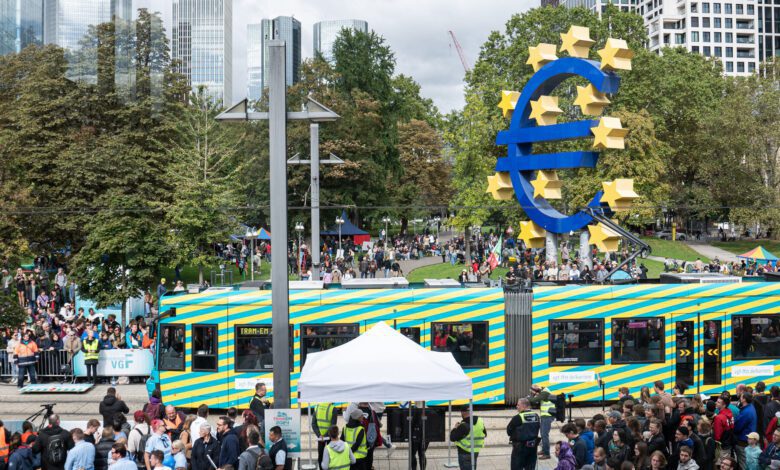
Twenty-six two-person teams from 21 countries competed in the 11th European Tramdriver Championship in Frankfurt on September 14, 2024. The event turned everyday transit skills—accurate stopping, judging speed and controlling a heavy vehicle—into a public competition watched by thousands at Willy-Brandt-Platz.
The contest tested precision rather than speed
Tram drivers do not win by racing through city streets. Points reward smooth, safe and exact handling, reflecting the professional skills needed to place doors at platforms, protect standing passengers and operate within narrow urban clearances.
Time can break a tie, but only after controlled performance.
Teams represented their transit systems
Each city fielded two drivers, with gender representation built into the team format. Competitors came from systems including Budapest, Brussels, Krakow, Rotterdam, Paris, Vienna and the host city Frankfurt.
The gathering also let operators exchange experience across different vehicles and networks.
The disciplines made technical work visible
Challenges can include stopping the second door at an exact platform mark, estimating speed without seeing the speedometer, emergency braking and passing a barrier with minimal clearance. Other exercises use playful formats such as tram bowling or billiards.
The spectacle rests on genuine judgement of mass, momentum and distance.
Budapest won by the smallest margin
Krisztina Schneider and Akos Bodnar produced two excellent runs to take the team title with 3,850 points. Brussels pair Ilham Ouamass and Adil Saaidi finished only 50 points behind on 3,800.
Organizers said three seconds ultimately separated the leading teams.
Krakow completed the podium
Aleksandra Tomaszek and Marcin Jasnos earned third place with 3,100 points. Rotterdam placed fourth and Paris fifth, followed by Vienna and Milan.
Frankfurt’s home team placed 16th, demonstrating that familiarity with the city did not guarantee mastery of the competition vehicle and course.
Brussels had the best individual run
Ouamass scored 2,250 points for the highest individual performance. Schneider and Bodnar followed with 1,959 and 1,900 respectively, allowing their combined consistency to overcome Brussels in the team ranking.
That contrast showed why the championship rewards both members.
The crowd extended beyond the square
More than 10,000 spectators attended in person, according to organizers, and about 100,000 watched German- and English-language online streams. Transit competitions attract interest because they reveal difficult work that passengers normally notice only when something goes wrong.
The public setting also created a festival around sustainable urban transport.
Budapest added a third championship
The 2024 victory followed Budapest wins in 2012 and 2016. A recurring title suggests training depth, though each event uses a host vehicle and newly designed exercises that limit direct comparison between years.
Individual drivers, not entire cities, earned the result.
The humour did not diminish the safety message
Pushing a large ball toward bowling pins with a tram looks whimsical, but doing it accurately requires the same speed control and stopping judgement used in service. Organizers made professional competence accessible without pretending ordinary routes are a sport.
The championship’s real value was recognition. Drivers routinely manage passengers, traffic, signals, weather and braking distances with little ceremony. Frankfurt gave them a stage, and Budapest’s narrow victory showed that precision measured in centimetres and seconds can be as compelling as conventional racing.