Israel’s Strikes in Beirut Brings the Once-Bustling Suburbs to a Standstill
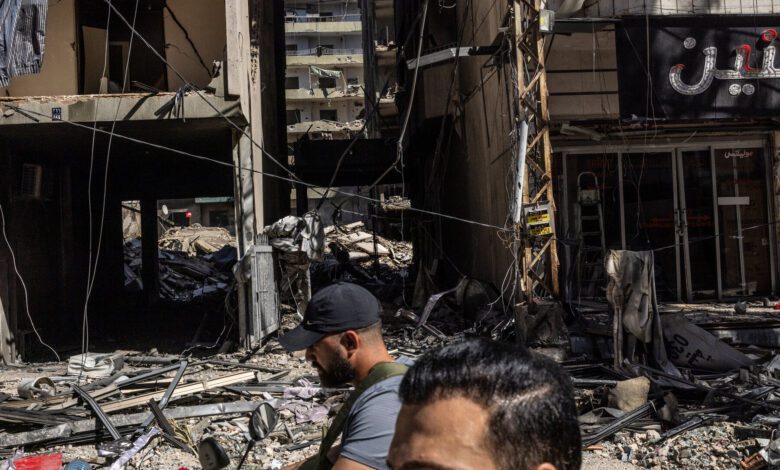
Israeli airstrikes transformed Dahiyeh, Beirut’s densely populated southern suburbs, in late September and early October 2024. Streets and businesses emptied as residents fled bombardment directed at Hezbollah leaders and facilities embedded in the urban area.
The escalation followed nearly a year of fire
Hezbollah began launching rockets toward Israel after the Hamas-led attack of October 7, 2023, saying it was acting in support of Gaza. Israel responded with strikes in Lebanon, and tens of thousands of civilians left communities on both sides of the border.
The exchange intensified dramatically in September 2024 as Israel targeted Hezbollah’s command structure and weapons. Limited cross-border conflict became a broad air campaign.
Dahiyeh was both a community and a stronghold
Hezbollah maintained political, military and social infrastructure in the southern suburbs. Hundreds of thousands of civilians also lived and worked there in apartment blocks, markets, schools and offices.
Describing the entire district only as a militant stronghold erases its civilian population. Ignoring Hezbollah’s presence would also leave out why Israel selected targets there.
The strike that killed Nasrallah changed the area
Heavy bombing on September 27 killed Hezbollah leader Hassan Nasrallah and other senior figures. Multiple buildings were destroyed, and further strikes and warnings pushed more families to leave.
Some residents reached schools converted into shelters; others slept in cars, public squares or on the waterfront. Leaving quickly meant abandoning medicines, documents, pets and livelihoods.
Businesses could not operate normally
Shuttered shops reflected more than lost daily sales. Owners and employees did not know when it would be safe to return, whether buildings remained structurally sound or whether suppliers could reach them.
Lebanon was already experiencing a severe economic crisis. Displacement added rent, transport and food costs to households whose savings and public services had been weakened for years.
Civilian protection remained legally required
Parties to conflict must distinguish military objectives from civilians and civilian objects, take feasible precautions and avoid attacks expected to cause excessive civilian harm relative to the anticipated military advantage.
A warning can help people leave but does not automatically make an attack lawful, especially when routes and shelters are unsafe. Hezbollah also had obligations not to place military activity in ways that endangered civilians and not to launch indiscriminate attacks.
Displacement spread across Lebanon
United Nations agencies recorded hundreds of thousands of newly displaced people as the campaign expanded into southern Lebanon, the Bekaa Valley and Beirut. Lebanese authorities later estimated that more than one million people had been uprooted during the peak escalation.
Host communities and public schools absorbed the sudden movement while hospitals faced attacks, evacuation and supply pressure. The crisis could not be understood only through battlefield results.
A ceasefire allowed many people to return
A ceasefire between Israel and Lebanon took effect on November 27, 2024. Residents returned to Dahiyeh and other areas to find damaged or destroyed homes and businesses.
The agreement reduced major fighting, but recovery required debris removal, unexploded-ordnance checks, shelter and reconstruction. Alleged violations also showed that a ceasefire is a process requiring monitoring rather than a single final event.
The silence of the streets recorded human cost
The standstill demonstrated the immediate effect of military pressure on Hezbollah, yet it also revealed how urban warfare transfers danger to an entire population. Empty roads did not mean the district lacked civilians; they showed that civilians had been forced elsewhere.
A complete account must hold the military and humanitarian facts together. Israel targeted an armed organization that had fired on its territory, Hezbollah operated within a populated area, and families who controlled neither strategy lost homes, income and safety. The later return did not restore what the bombing destroyed.