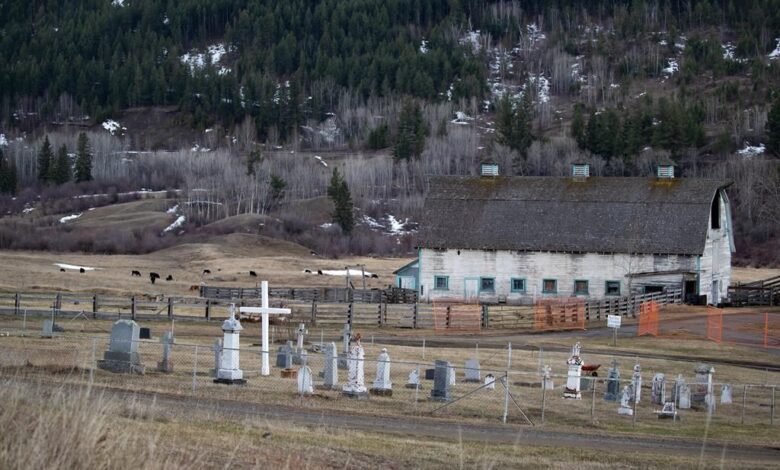
Williams Lake First Nation reported in October 2024 that at least 55 Indigenous children died or disappeared while attending the former St. Joseph’s Mission residential school in British Columbia. The figure was more than three times the 16 children then listed for the institution in the National Centre for Truth and Reconciliation’s memorial register.
How the number was assembled
The Nation created a death-and-disappearance dossier using archival records, photographs, survivor interviews and information held by families and the National Centre for Truth and Reconciliation. The work began in 2021 and continued as new names and records were identified.
“At least 55” was not a final limit. Residential-school records were incomplete, names could be misspelled or replaced with numbers, and deaths were sometimes reported late or not reported to families. The dossier therefore documented the minimum supported by the investigation at that stage.
The institution’s history
St. Joseph’s Mission operated near Williams Lake from 1886 to 1981. It was administered by Catholic orders within the residential-school system established and funded by the federal government. Thousands of First Nations children from several communities were forced to attend or were separated from family and culture through coercive policy.
Survivors have described abuse, harsh punishment, hunger, dangerous conditions and attempts to suppress Indigenous languages and identity. The children who died or disappeared must be understood within that state-and-church system, not as an unexplained collection of ordinary school records.
Documents and ground searches are different evidence
The 55-child dossier came from historical and community research. It should not be confused with geophysical findings on the property. In separate work, the Nation recorded 93 reflections in a first survey area and 66 in a second area that displayed characteristics consistent with possible burials.
Ground-penetrating radar detects changes below the surface; it does not identify a person or by itself confirm human remains. Williams Lake First Nation has repeatedly explained that excavation would be required for certainty. Calling every reflection a confirmed grave would misstate the evidence, while dismissing the investigation because excavation had not occurred would ignore the archival record and survivor knowledge.
Why names and identities matter
A memorial register is not merely a statistic. Establishing a child’s name, home community, family connection and last known circumstances can help relatives recover knowledge that institutions withheld and can guide decisions about ceremony, commemoration and further investigation.
The Nation—not outside commentators—must lead decisions about disturbance of possible burial sites. Scientific capability does not override cultural protocols, family wishes or the need to prevent further harm.
Work remained unfinished
The former mission and associated lands cover hundreds of hectares, while the first geophysical phases examined only portions of the area. Records are dispersed among governments, churches, archives and private holders, making cooperation and full disclosure essential.
Funding is also needed for research, survivor participation, mental-health support, site protection and long-term care of records. A press announcement cannot substitute for sustained work after public attention moves elsewhere.
Reporting without denial or sensationalism
Accurate language distinguishes documented deaths and disappearances, possible unmarked burials and any remains that may eventually be confirmed. It also recognizes that uncertainty about a particular radar reflection does not erase the proven operation or harms of the residential-school system.
The interim finding of at least 55 children deepened an already established history and restored information omitted from the national register. Readers affected by residential schools can contact the National Indian Residential School Crisis Line at 1-866-925-4419 for support.