How a U.S. Ally Uses Aid as a Cover in War
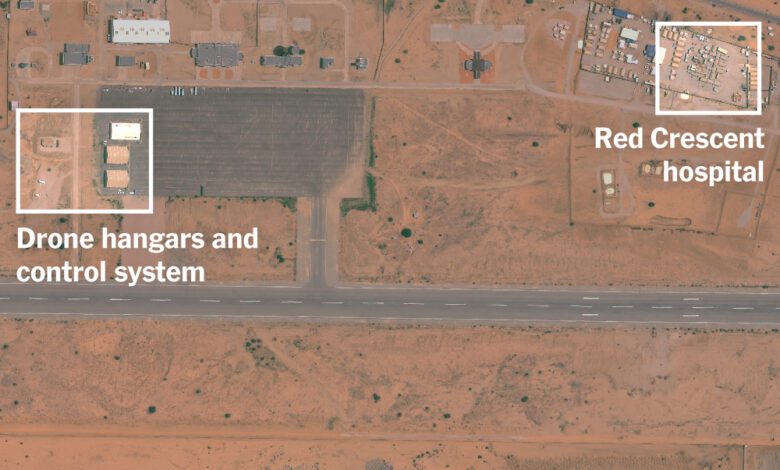
Flights into eastern Chad became a focus of scrutiny during Sudan’s civil war after investigators alleged that the United Arab Emirates used a humanitarian operation near the border as a channel for military support to the Rapid Support Forces. The UAE denied supplying the group and said its activity supported a field hospital and relief work.
The war created an enormous relief emergency
Fighting between the Sudanese Armed Forces and the paramilitary RSF began in April 2023. Both sides were accused of grave abuses, while attacks and hunger displaced millions of people inside Sudan and across neighbouring borders.
Chad received large numbers of refugees from Darfur and was a logical base for genuine medical aid.
Amdjarass drew investigators’ attention
The UAE operated a field hospital near Amdjarass in northeastern Chad. Repeated cargo flights, the airfield’s proximity to Darfur and reported truck movements led journalists, diplomats and monitors to examine whether some shipments served a second purpose.
Flight activity alone cannot establish what was carried or who ultimately received it.
A UN panel assessed the allegations
A United Nations panel of experts reported in January 2024 that allegations of arms transfers through Amdjarass were credible. It described information that weapons and ammunition were unloaded from cargo aircraft and transported toward Darfur.
The finding was significant, but it was not a criminal judgment and the UAE continued to reject the accusation.
Open-source evidence added detail
Satellite images, aircraft tracking, videos and interviews were used to reconstruct supply routes. Rights organizations also documented foreign-made weapons in Sudan, although identifying a weapon’s manufacturer does not by itself prove which government supplied a particular unit.
Reliable attribution requires matching dates, cargo, intermediaries and recipients.
The United States faced an alliance problem
The UAE was an important US security and commercial partner. If an ally materially assisted a force accused of atrocities while publicly supporting diplomacy, Washington would need to reconcile arms policy and private pressure with its stated civilian-protection goals.
Strategic partnership does not remove the duty to investigate credible evidence.
Aid cover would endanger real relief workers
Humanitarian emblems and medical operations depend on neutrality and trust. Using relief flights or protected symbols to conceal arms would violate that trust, expose staff and patients to suspicion, and make access harder for organizations with no military role.
That is why the allegation required careful investigation rather than sensational repetition.
Responsibility extended beyond one outside state
Sudan’s belligerents obtained money, fuel and weapons through regional networks. The armed forces and RSF each retained agency for their conduct, and support to one side did not excuse violations by the other.
A complete account should follow supply chains while keeping Sudanese civilian suffering at the centre.
Verification and accountability were practical priorities
Governments could publish cargo manifests, permit independent inspection, preserve flight data and sanction individuals or companies proven to facilitate unlawful transfers. The Security Council and national authorities could also strengthen monitoring of routes into Darfur.
The available reporting raised serious, corroborated questions about Amdjarass, but fair language remained essential: the UAE said the mission was humanitarian, while investigators described evidence consistent with covert support to the RSF. Treating that dispute as resolved without further evidence would be as irresponsible as ignoring it because the accused state was an ally.