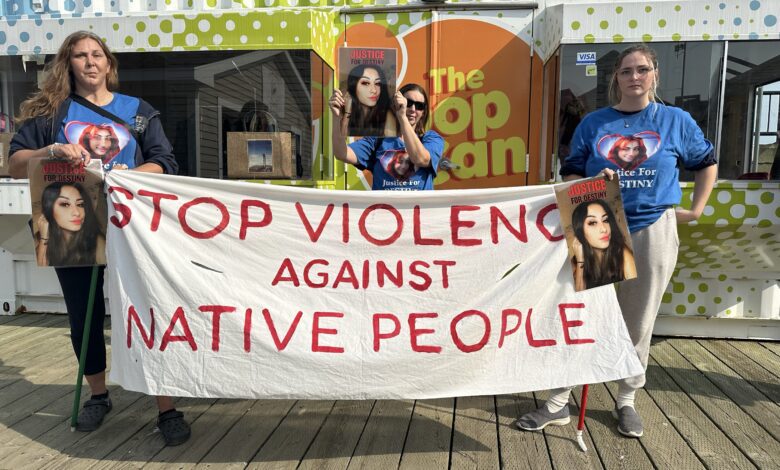
The family of Destiny Rennie, a 22-year-old Mi’kmaw woman who died after treatment in a Nova Scotia hospital, joined a Halifax march on October 4, 2024, to demand answers and broader change. Their civil claim alleged medical negligence and racial bias; those allegations had not been tested in court.
Rennie died after developing meningitis
A notice of action filed in Nova Scotia Supreme Court said Rennie experienced brain death on August 3, 2023, and was pronounced dead three days later. The document identified meningitis as the cause.
Her family alleged that health-care workers were slow to respond as her condition worsened over several days. They also alleged that clinicians incorrectly viewed her as an illicit-drug user and that race may have influenced her care.
The lawsuit remained an allegation
A notice of action sets out a claimant’s case; it is not a judicial finding. The defendants were entitled to respond, challenge the evidence and receive a fair hearing before liability could be established.
Nova Scotia Health said it would not comment on ongoing legal proceedings. That procedural response should not be presented as an admission or as proof that the family’s account was unfounded.
Her father said the loss was preventable
Tim Toney told marchers that his daughter should still be alive. Family friend Donna Maiden described a lasting absence for the people who knew Rennie.
Their testimony gave the case a human centre without resolving its medical questions. A court would need records, expert evidence and testimony to decide whether the standard of care was breached and whether any breach caused the death.
The march connected one case with a national crisis
The event coincided with the National Day of Action for Missing and Murdered Indigenous Women, Girls and Gender-Diverse People. Participants honoured people lost across Canada and called for governments and institutions to implement systemic reforms.
Rennie’s hospital death and the wider MMIWG2S+ crisis are not identical legal categories. Her family used the day to argue that violence and discrimination can also operate through institutions and failures of care.
Speakers called for education and accountability
Sipekne’katik First Nation councillor De-Anne Sack asked why Indigenous women continued to face preventable harm and urged people to learn about the First Peoples of the region. October is Mi’kmaw History Month in Nova Scotia, giving the appeal additional local context.
Education is necessary but cannot replace measurable accountability. Health systems need reliable complaint processes, culturally safe care, collection of appropriate race-based data, independent review and action when evidence shows unequal treatment.
Bias can affect clinical judgment
Stereotypes about substance use or pain can distort triage and diagnosis when a clinician treats an assumption as fact. Safeguards include complete histories, documented reasons for decisions, reassessment when symptoms change and respectful communication with patients and families.
Discussing that risk does not prove what occurred in Rennie’s treatment. It explains why the racial-bias allegation warranted a transparent examination rather than dismissal or premature acceptance.
Justice required facts and lasting reform
The family sought accountability for one young woman while marchers demanded action on a pattern recognized by the national inquiry. Both aims depend on institutions listening to Indigenous families and preserving evidence.
A trustworthy account holds the legal boundary clearly: Destiny Rennie died with meningitis, her family alleged negligent and discriminatory care, and no court had yet ruled on those claims. Respect for her memory requires neither assuming guilt nor treating unresolved allegations as unworthy of investigation.