The Central Board of Secondary Education extended the May 2026 window for Class XII students seeking scanned copies of evaluated answer books, moving the deadline to midnight on May 25 after candidates reported difficulty using the online system.
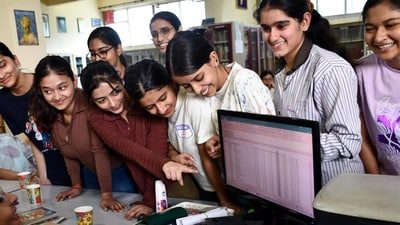
This was a time-limited post-result facility for the main 2026 examination. The date has now passed and should be read as an archived service notice, not as a currently open application window.
Why the deadline moved repeatedly
CBSE’s examination-circular archive records notices on May 19, 20, 22 and 24 concerning access to scanned answer books. The final extension gave candidates additional time while the board dealt with portal and payment problems. CBSE said the other terms of the facility remained unchanged.
The Education Ministry also sought technical and banking support for the post-result platform. Public-sector banks were asked to assist with payment integration, while technical teams were assigned to examine reported failures. Extending the window reduced the risk that a student would lose the opportunity solely because a transaction or portal session failed.
A scanned copy is the first stage
Obtaining the evaluated answer book allows a student to inspect what was scanned and how it was marked. It is distinct from asking CBSE to verify an observed issue or re-evaluate an answer. Later CBSE notices opened the next-stage portal and explained the difference between missing or blurred pages, an incorrect booklet or marking-scheme issue, and a request for academic re-evaluation.
Applications are governed by the schedule and fee stated in the applicable circular. A screenshot showing an attempted payment is useful evidence of a technical problem, but it does not automatically substitute for a completed application. Candidates should retain the transaction reference, application number and official acknowledgement.
How to avoid outdated instructions
Search results and old news stories can continue to display a deadline after the window has closed. Students should start from CBSE’s examination-circular page or authenticated post-result portal and match the notice to the correct class, examination type and year. Main-examination, supplementary-examination and later re-evaluation windows have different dates.
CBSE’s June guidance said revised results and marksheets, where applicable after verification or re-evaluation, would be provided through DigiLocker in phases. That later process should not be confused with the May request for a scanned copy.
What the episode shows
When a digital portal is the only accepted route for a high-stakes request, uptime, payment recovery and clear status messages become part of procedural fairness. Publishing each extension in the official circular archive creates an auditable record, but candidates also need prompt in-portal notices and a support route capable of resolving failed transactions before the deadline.
Schools can reduce confusion by linking directly to the dated circular instead of forwarding cropped messages. A notice should state the class, examination year, service requested, opening and closing times, fee and official domain. Those details help students distinguish a genuine extension from an outdated or fraudulent payment request.
For future cycles, a resilient portal should preserve an application that reaches the payment stage, reconcile delayed bank confirmations and show a downloadable receipt. A public incident notice should explain whether an extension applies automatically, so students do not have to rely on social-media speculation during an outage.
Source: CBSE examination-circular archive.