NASA Details Its Plan to Build a Lunar Base at the Moon’s South Pole

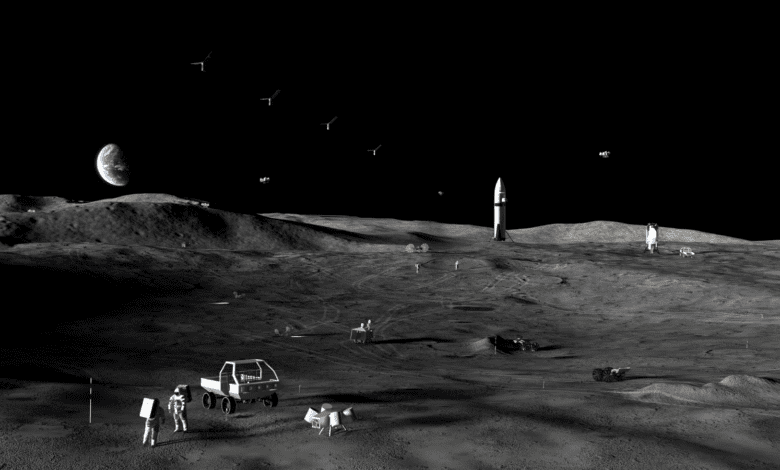
NASA has outlined a phased programme for establishing a sustained American presence near the Moon’s south pole. The proposal combines robotic reconnaissance, cargo deliveries, surface transport, communications, power and habitats rather than treating a “moon base” as one building delivered in a single mission.
The architecture is a plan, not a guarantee that every mission or date will proceed unchanged. Lunar programmes depend on spacecraft development, budgets, testing and launch availability. NASA’s documents describe how separate missions could build capability over time while giving engineers opportunities to change later phases after learning from early landings.
Phase one: test the systems before permanent occupancy
The first phase, covering 2026 through 2029 in the published architecture, is centred on robotic exploration and technology demonstrations. NASA has described a busy sequence involving roughly 25 missions and 21 surface landings. Planned payloads include rovers, navigation and communications equipment, power demonstrations and instruments that can assess surface conditions.
Blue Origin’s uncrewed Blue Moon Mark 1 Endurance lander is among the missions identified for early testing. Its role is to demonstrate cargo delivery, controlled descent and surface operations; it is not a crewed landing. A later human-rated lander would require additional development and safety certification.
Phase two: deliver heavier infrastructure
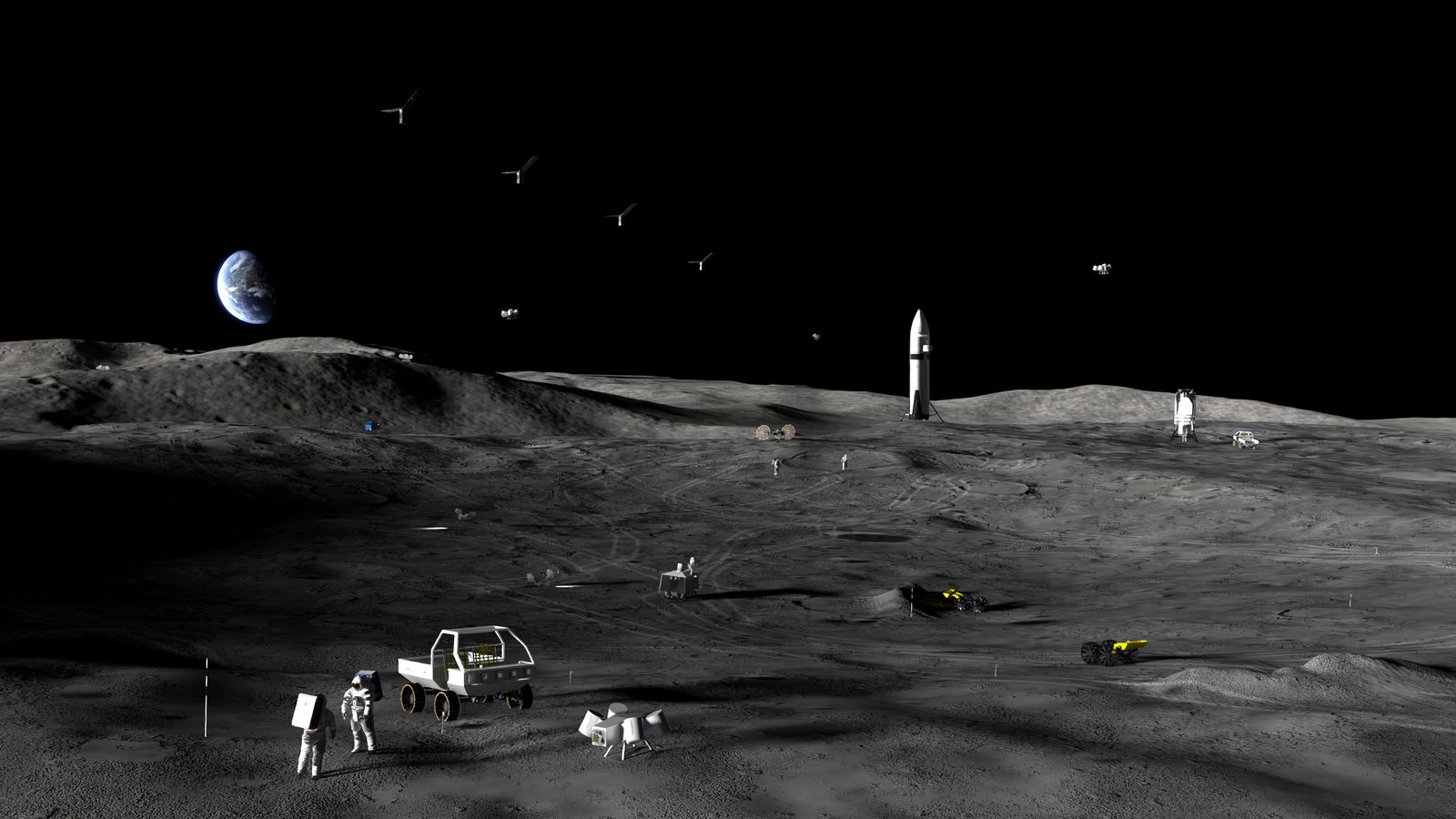
NASA’s second phase is expected to move from individual demonstrations toward semipermanent infrastructure and early occupancy. The architecture describes more capable mobility, surface-to-orbit communications, power systems and initial habitation. It also anticipates a large cargo campaign, with as much as 60 tonnes delivered through about two dozen missions.
Reliable power is a central constraint at the lunar south pole. Sunlight can be limited by terrain and long shadow periods, while equipment must survive extreme temperature changes. NASA and the US Department of Energy are working on lunar fission power alongside solar and battery systems. A surface reactor could supply steady electricity when sunlight is unavailable, but it introduces engineering, launch-safety and policy questions that must be resolved before deployment.
Why the south pole is strategically important
The polar region offers access to scientifically important terrain and permanently shadowed areas that may contain water ice. Water could support research and, eventually, be processed into oxygen or propellant, but its quantity, accessibility and economics still require direct measurement. Communications geometry, landing hazards and long periods of darkness also make the region technically demanding.
A base could allow longer scientific campaigns than short visits, including geological sampling, astronomy and testing systems for later Mars missions. It would also require dependable life support, radiation protection, dust control, maintenance and emergency return options. Those less-visible systems will determine whether a surface presence is sustainable.
What to watch next
The meaningful milestones are successful uncrewed landings, demonstrated power and communications, reliable cargo delivery and safe surface mobility. A presentation or architecture document does not by itself place infrastructure on the Moon. Progress should be judged mission by mission, with schedule changes separated from the long-term objective.
Sources: NASA Moon Base Architecture User’s Guide; NASA programme directives.