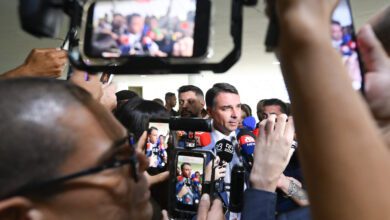
Siddaramaiah said he rejected an offer to enter the Rajya Sabha after submitting his resignation as Karnataka chief minister on May 28, 2026. He told reporters that he had no interest in moving to national politics and intended to remain active in Karnataka as the elected MLA for Varuna.
What Siddaramaiah said about the transition
The Congress veteran said the party’s central leadership had asked him to step down two days earlier and that he complied voluntarily. He thanked Sonia Gandhi, Rahul Gandhi and party president Mallikarjun Kharge for the opportunity to serve twice as chief minister.
He submitted his letter to the governor’s special secretary because Governor Thaawarchand Gehlot was outside the state. Siddaramaiah expressed confidence that the resignation would be accepted through the constitutional process. Deputy chief minister D.K. Shivakumar and cabinet colleagues accompanied him.
Why the Rajya Sabha offer mattered
A seat in Parliament’s upper house could have given Siddaramaiah a continuing national position while creating space for Shivakumar in Bengaluru. Rejecting it signalled that he did not want his departure from the chief minister’s office to become an exit from state politics.
Siddaramaiah said he still had two years remaining as an MLA and would continue public work in Karnataka. That choice preserved his direct role in the Assembly and his connection to the AHINDA coalition associated with minorities, backward classes and Dalits.
Not a retirement announcement
A resignation from executive office and retirement from politics are different decisions. The former ends control of the council of ministers once accepted and a successor takes office. It does not cancel the person’s legislative mandate or party membership.
His continued presence could provide experience and electoral reach to Congress, but it could also require careful coordination with the new chief minister. Whether he becomes a mentor, critic or alternative power centre depends on later conduct rather than statements made on transition day.
The constitutional sequence
The governor formally accepts a chief minister’s resignation and invites a person likely to command an Assembly majority to form the government. The outgoing ministry may be asked to continue in a caretaker capacity until the successor is sworn in. Congress legislators and the party leadership then formalized support for Shivakumar.
The governor’s temporary absence did not mean Karnataka lacked a functioning government or that the resignation had no effect indefinitely. It meant the formal acceptance awaited the office-holder’s return and the transition had to follow the appropriate documentation.
Siddaramaiah’s political legacy and next test
Siddaramaiah’s two terms were identified with welfare programmes, social-justice politics and fiscal debates over the cost of guarantees. Supporters highlighted inclusion and delivery; opponents criticized borrowing, implementation and internal Congress conflict. Those competing assessments require budget and outcome data, not only political speeches.
By staying in Karnataka, he retained a platform to defend that record and influence the remainder of the Assembly term. The confirmed event is narrower than speculation about his ambitions: he left the chief minister’s post, declined a Rajya Sabha proposal and said he would remain in active state politics.
source