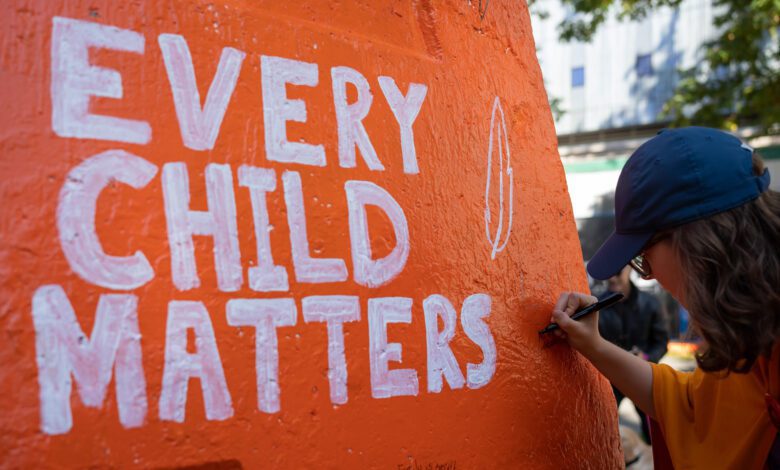
A September 2024 survey found that most Canadians believed governments should do more to address the legacy of residential schools. The result showed broad support for public responsibility, while the same polling also exposed a gap between endorsing reconciliation and planning a personal action.
The poll measured attitudes before September 30
Ipsos conducted the online survey for Global News from September 20 to 23 among 1,000 Canadian adults. The sample was weighted to reflect the population, and Ipsos gave the findings a credibility interval of approximately 3.8 percentage points, 19 times out of 20.
As with any opinion poll, the figures described the responses of a sample at a particular moment. They did not measure whether governments had fulfilled their obligations or whether respondents later acted on their intentions.
Three quarters wanted more government action
The survey reported that 75 percent thought governments needed to do more to address the effects of residential schools. Seventy percent said individuals should do more, while 64 percent expected employers to take greater responsibility.
Fifty-eight percent considered the National Day for Truth and Reconciliation important. Seventy percent supported making it a statutory holiday in every province, and 68 percent said all employers should recognize it.
Planned personal participation was lower
Only 22 percent said they planned to learn more about residential schools around the observance, 11 percent expected to attend an event and 23 percent planned to wear orange. These activities are not the only forms of engagement, but the contrast suggested that general approval did not always translate into immediate participation.
The finding should not be used to dismiss public concern. It instead points to the need for accessible education, local events and clear ways for people to support Indigenous-led priorities beyond a single commemorative day.
Residential schools were a state-backed system
For more than a century, Indigenous children were separated from their families and communities through a network funded by the federal government and largely operated by churches. Survivors have described physical and sexual abuse, neglect, forced assimilation and the suppression of languages and cultures.
The Truth and Reconciliation Commission documented the system and issued 94 Calls to Action in 2015. Progress cannot be assessed by symbolism alone; it includes child welfare, education, health, justice, language, records, commemoration and accountability.
Governments have different responsibilities
Ottawa controlled the residential-school system and carries central legal and policy obligations. Provinces and territories oversee areas such as schools, health care and many public institutions, while municipalities influence local commemoration and relationships.
Indigenous governments, survivors and communities must shape the work rather than merely be consulted after decisions are made. Reconciliation imposed without their authority risks repeating the paternalism it claims to address.
Optimism remained cautious
The survey found that 59 percent believed meaningful reconciliation could occur in their lifetime. That majority reflected hope, but it also left a large share unconvinced that institutions would deliver lasting change.
Public confidence is likely to depend on measurable outcomes: safe communities, equitable services, access to records, protection of languages and culture, land-related commitments, and implementation of agreements.
A holiday is a starting point, not the result
September 30 can create space to listen to survivors and learn the history, especially when workplaces and schools support meaningful participation. Orange shirts and ceremonies carry value when they remain connected to the people whose experiences they represent.
The survey’s central message was therefore twofold. Canadians broadly expected stronger institutional action, yet personal engagement was more limited. Durable reconciliation requires both: governments must meet concrete obligations, and the public must sustain attention after the commemorative date has passed.