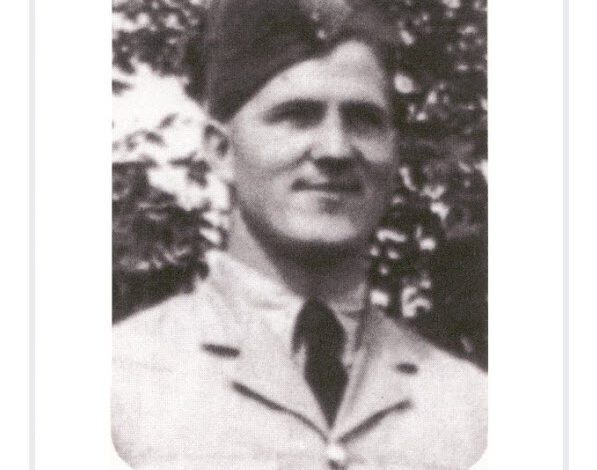
On Remembrance Day 2024, Cranbrook resident Cecile Wasylyk recalled her older brother Hervé Labrecque, a 22-year-old Canadian soldier captured and killed during the Battle of Normandy in 1944. She preserved the letters he sent home, an intimate family record connecting one young man’s voice to a war crime that took the lives of Canadian prisoners.
A brother known through letters
Wasylyk said her mother received relatively few letters from Labrecque and kept every one. Such correspondence can contain ordinary details, reassurance and longing that official service files do not. Its value comes from preserving the person behind a casualty number, while families decide which private passages should remain private.
Labrecque did not return home. He was among Canadian prisoners killed by units under the 12th SS Panzer Division during fighting after the Normandy landings. Wasylyk said he had been shot twice in the back of the head after capture. He is buried at the Bény-sur-Mer Canadian War Cemetery in France.
The Normandy prisoner killings
Approximately 156 Canadian prisoners of war were murdered in separate incidents in Normandy in June 1944. Captured soldiers were protected by the laws and customs of war; execution after surrender was a war crime, not an ordinary battlefield death.
The killings involved different locations and formations, so individual records and historical investigations are important. A broad phrase such as “Normandy massacre” can convey the pattern but should not erase the distinct circumstances of each victim.
The Kurt Meyer prosecution
Canada prosecuted SS commander Kurt Meyer after the war for offences connected to the treatment and killing of Canadian prisoners. A military court convicted him on some counts and imposed a death sentence, later commuted to life imprisonment. He was transferred to prison in Germany and released in 1954 after serving about nine years.
Meyer’s trial became an important early Canadian war-crimes proceeding. His conviction did not account for every Normandy killing or eliminate questions about other perpetrators, but it established command responsibility for part of the criminal conduct examined by the court.
Memory across a family and a country
Wasylyk had not visited her brother’s grave, yet said his memory remained alive. Distance from a cemetery does not diminish remembrance. Letters, photographs, military records and local ceremonies allow descendants and communities to reconstruct lives interrupted before many veterans could form families of their own.
Public remembrance should avoid turning young soldiers into abstract symbols. Accurate names, ages, units and burial records preserve individuality. It should also recognize that grief continues across generations and that families may remember military service with pride, pain or both.
Why the story still matters
Labrecque’s death illustrates why the treatment of prisoners remains a legal and moral obligation even during the most intense conflict. Remembering the crime is not an argument for glorifying war; it is a warning about what happens when captives are denied humanity.
Wasylyk’s letters carry a quieter lesson. History survives because someone saves evidence and tells the next generation who the person was. Hervé Labrecque was a Canadian soldier killed at 22 and buried far from home, but his sister’s testimony ensured that his life was not reduced to the manner of his death.