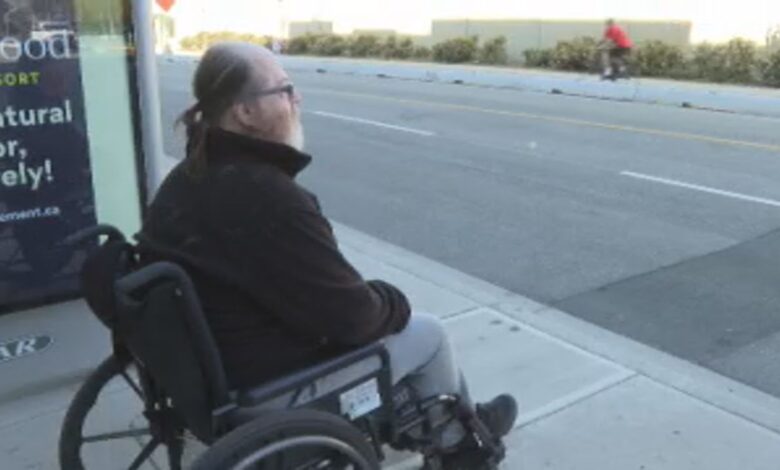
Kelowna resident Randy Millis said he was left unsecured on a BC Transit bus for several minutes in October 2024, prompting questions about how mobility-aid procedures were followed. Millis had relied on a wheelchair for about a year and used transit for everyday travel.
Millis’s account of the trip
Millis said he boarded a bus on a Friday, moved into the designated wheelchair area and asked the driver to secure his chair. According to his account, the driver did not respond even after two other passengers repeated the request.
He estimated that the bus travelled for seven to ten minutes before firm braking caused his wheelchair to roll into another wheelchair user. No serious injury was reported, but an unsecured chair can turn an ordinary stop or collision into a preventable hazard.
Concerns extended beyond securement
Millis also described occasions when drivers would not deploy the ramp, leaving him to cross a gap between the curb and bus. Small front casters can catch in a gap even when a larger rear wheel appears able to cross it, so a short distance can still create a fall risk.
These were allegations from one passenger and were not, by themselves, a completed finding against an individual operator. They were specific enough, however, to warrant a review of vehicle records, available video, operator reports and witness accounts.
What BC Transit’s guidance requires
BC Transit’s passenger guidance tells a rider using a mobility aid to enter the designated area and allow the driver to secure it. Its operator policies state that a bus should not move until a wheelchair or scooter is properly secured and that a ramp should be deployed when requested.
Space and equipment limits can affect whether a particular device can be carried safely. When that happens, the operator should explain the constraint and the available alternative; silently proceeding with an unsecured rider does not provide an accessible service.
The agency response
BC Transit said it was aware of the complaint and was communicating with Millis. It referred the matter for investigation with Transdev, the contracted operator in the Central Okanagan system, and said passenger safety and accessible service were priorities.
An investigation needed to do more than determine whether a single request was heard. It could examine whether the securement system worked, whether the bus stopped in a usable position, what training the operator had received and how quickly complaints involving an immediate safety risk were escalated.
Accessibility is an operating standard
A ramp, kneeling bus or wheelchair bay is useful only when staff deploy and use it consistently. Riders should not have to persuade other passengers to intervene, and a person with a disability should not be treated as an inconvenience when asking for the safety procedure designed for that trip.
At the same time, securement should be explained and performed with consent and respect. Drivers may need to ask about safe attachment points, but they should not grab a passenger or make assumptions about what assistance is required.
What meaningful follow-up looks like
BC Transit and its contractor could track ramp and securement complaints, test equipment during inspections, use scenario-based training and tell complainants what corrective action was taken within privacy limits. Aggregate reporting would show whether the incident was isolated or part of a recurring service gap.
Millis’s experience was significant because independent mobility depends on predictable treatment, not occasional accommodation. The fair conclusion was neither to declare the driver guilty before the investigation nor to dismiss the report because no one was badly hurt. It was a credible safety complaint that required documented review and a service response capable of preventing a repeat.