Lawrence Bishnoi became central to an October 2024 rupture in Canada–India relations after the Royal Canadian Mounted Police alleged that Indian government agents were linked to an organized-crime network it called the “Bishnoi group.” The allegation emerged as Canada expelled six Indian diplomats and India rejected Ottawa’s claims.
Who Lawrence Bishnoi is
Bishnoi, a Punjab-born law graduate who was 31 at the time, had been imprisoned in India since 2015. He was held at Sabarmati Central Jail in Gujarat after periods in different prisons.
India’s National Investigation Agency accused him of directing a transnational criminal syndicate through associates in India and abroad. His lawyer said he contested roughly 40 cases involving allegations such as murder, extortion and terrorism offences, with many trials still to begin.
Those are serious accusations, but a charge or agency description is not a conviction. A fair account attributes each claim and includes the defence position.
What Canadian police alleged
On October 14, the RCMP said investigations had linked agents of the Indian government to homicides and other violent acts, organized crime targeting South Asian Canadians, interference in democratic processes and clandestine information collection.
Police alleged that diplomats and consular officials gathered information directly or through proxies, sometimes using coercion, and that information was then used to threaten members of Canada’s South Asian community. The RCMP specifically identified the Bishnoi network as one organized-crime connection.
What police did not claim
The public statement did not announce a Canadian criminal charge against Bishnoi or publish evidence proving that he personally ordered a particular act in Canada. It referred to multiple continuing investigations and a pattern police believed created an urgent public-safety risk.
That distinction prevents an intelligence or investigative assessment from being presented as a completed trial. It also leaves room for individual suspects to be judged on evidence specific to each case.
The wider diplomatic dispute
Canada’s allegations followed the June 2023 killing of Sikh separatist Hardeep Singh Nijjar in Surrey, British Columbia. Prime Minister Justin Trudeau had said Canadian agencies were pursuing credible allegations of a link to Indian government agents.
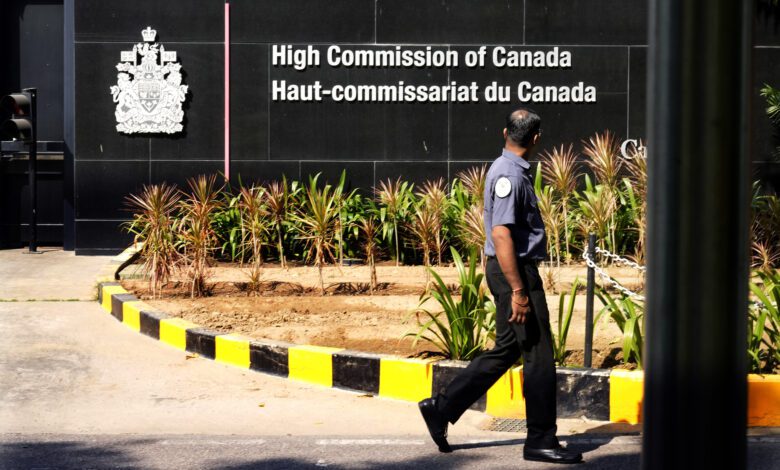
In October 2024, Ottawa said six Indian diplomats and consular officials were persons of interest and expelled them after India declined to waive immunity for interviews. India withdrew its high commissioner, expelled six Canadian diplomats and called the allegations baseless and politically motivated.
Claims involving India
Indian authorities had associated Bishnoi’s network with alleged extortion, shootings and killings. They alleged involvement after shots were fired outside actor Salman Khan’s home and investigated a social-media claim of responsibility for Maharashtra politician Baba Siddique’s killing. Those claims remained for courts to test.
Bishnoi’s stated position
In a media interview later removed from the internet, Bishnoi said he opposed the Khalistan separatist project and was not anti-national. Indian police investigated how an imprisoned suspect had been able to participate in the interview.
His position complicated simplistic descriptions of the dispute. Canadian authorities said pro-Khalistan activists were specifically targeted; an alleged criminal network need not share a victim’s politics to be used against that person.
How to read the allegations
The public-interest issue was not the nationality or religion of an entire community. It was whether state officials used diplomatic access, proxies and organized crime to intimidate or harm people in Canada—claims that, if proved, would violate Canadian sovereignty and criminal law.
India was entitled to reject the accusations and demand evidence; Canada was responsible for protecting people within its borders and prosecuting offences with admissible proof. Reporting should present both governments’ positions without treating diplomatic denial as exoneration or police allegation as a verdict.
Bishnoi was “at the centre” of the row because the RCMP named the alleged network bearing his name, not because a Canadian court had established his personal role. That legal boundary is essential to an accurate account of an unusually serious dispute.