Nepal tunnel rescue: searches advance at Trishuli and Chilime, but workers remain unaccounted for

KATHMANDU, August 31 — Nepal’s tunnel rescue effort moved further into flood-hit hydropower sites on Monday, with army-led teams reaching sections of the Upper Trishuli-1 and Chilime tunnels while searches continued elsewhere. The progress provides a clearer account of where rescuers have gained access, but not a reliable total of survivors still inside.
Nepali teams worked through the night with support from Indian and Chinese specialists. Debris blocking entrances and internal passages remained a central obstacle: excavating a route into a tunnel is a necessary step, not confirmation that missing workers have been located.
What is known at each project
- Upper Trishuli-1: The army’s August 31 account said searchers had advanced about 300 metres into a tunnel and recovered one body. That recovery does not establish the fate of everybody missing from the project.
- Chilime: A joint team, including foreign experts, entered approximately 100 metres. The army reported mud blocking the interior and the recovery of two bodies.
- Trishuli-3B: Troops and specialists remained deployed for search operations. Its status must be kept separate from the similarly named 3A and Upper Trishuli-1 sites.
- Trishuli-3A: Sunday’s reporting described the location of an entrance below a vertical access point. Rescuers were clearing the approach and preparing oxygen and cameras to examine conditions farther inside.
Equipment and specialist assistance
Excavators and bulldozers were dismantled for helicopter transport to Battar in Nuwakot, an indication of how difficult it has been to move heavy machinery into the affected area. An Indian technical contingent included doctors, paramedics and tunnel engineers; its reconnaissance covered hydropower sites in coordination with Nepali security agencies.
Reports of foreign assistance concern specialist tasks across several projects. They should not be read as evidence that every national team is working inside every tunnel.
Why a single “trapped workers” number would mislead
The available accounts use different categories: people missing from project premises, workers believed to have been inside tunnels, and people whose location rescuers have actually established. Those groups are not interchangeable, and estimates cannot establish whether an individual is alive.
The next substantive milestones are safe access to occupied work areas, verified contact with missing people and named project-level rescue confirmations. Until those are reported, neither an entrance being found nor equipment reaching a site should be described as a successful rescue of the workers believed to be beyond it.
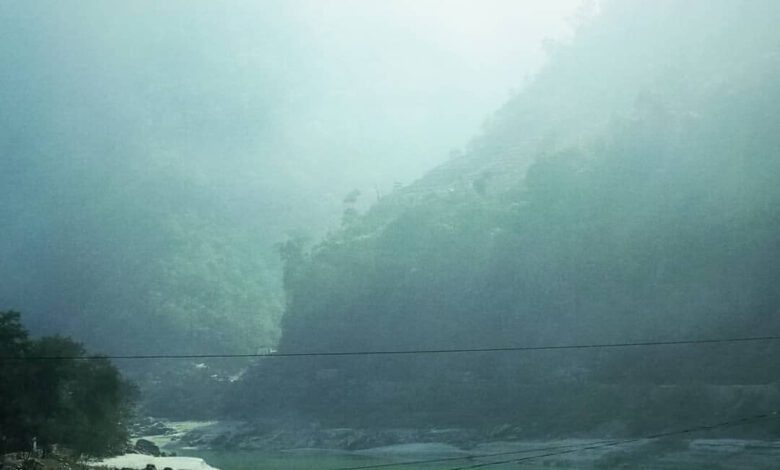
Archive location photograph: the Trishuli River in Nepal, 31 December 2018. This is not a photograph of a tunnel, the 2026 flood or current rescue work. Photo: Liznann, Wikimedia Commons, CC BY-SA 4.0.