
Nepal flood health risks: damaged clinics, unsafe water and disease surveillance

KATHMANDU, September 2 — Nepal’s flood emergency is shifting from immediate rescue alone to a second public-health challenge: keeping essential care available while displaced families face unsafe water, crowded shelter and damaged transport links.
The World Health Organization says three health posts were completely damaged, one hospital was partially damaged and access to two hospitals was affected. Around 10,000 households were reported to need immediate relief. These are preliminary operational figures, not a final nationwide damage assessment.
The main health threats
Floodwater can contaminate wells, stored food and distribution systems with sewage, fuel, chemicals or animal waste. WHO therefore identifies diarrhoeal disease, respiratory illness, unsafe water and food, injuries, vector-borne disease and mental-health needs among the priorities in affected districts.
A higher risk does not mean an outbreak has already been confirmed. The distinction matters: surveillance is intended to detect unusual clusters early, while hygiene, safe-water distribution and functioning clinics reduce the chance that predictable risks become a second emergency.
The affected area includes Rasuwa, Nuwakot, Dhading and Chitwan in Bagmati Province, as well as Gorkha and Tanahun in Gandaki Province. Nepal has declared 15 municipalities disaster crisis-affected areas for three months.
What the response includes
The Health Emergency Operation Centre has been activated and Health Cluster coordination is operating under government leadership with WHO support. Emergency medical teams have travelled from Kathmandu to affected districts, while responders are supporting trauma care, first aid, blood availability and continuity of essential services.
WHO has released US$150,000 from its regional emergency fund and mobilised an Interagency Emergency Health Kit designed to cover the basic health needs of nearly 10,000 people for three months. Multipurpose tents and body bags are also included in the response described on the WHO Nepal emergency page.
Practical precautions for affected families
- Use sealed, boiled or officially treated water where local authorities advise it.
- Discard food that touched floodwater or cannot be safely refrigerated.
- Clean and cover cuts; seek medical help for deep wounds, fever, persistent diarrhoea or breathing difficulty.
- Do not mix household chemicals or enter damaged buildings with unstable power supplies.
- Follow vaccination and disease-control advice issued by health authorities, not forwarded messages.
People with diabetes, heart disease, pregnancy-related needs or other continuing treatment can be harmed by interruption even when they have no flood injury. Restoring medication supply, referrals, maternal care and routine services is therefore part of disaster response, not a lower-priority add-on.
WHO’s assessment is explicitly provisional. The responsible reading is that health risks are serious and require prevention, while avoiding claims that a particular epidemic has started without laboratory and surveillance evidence.
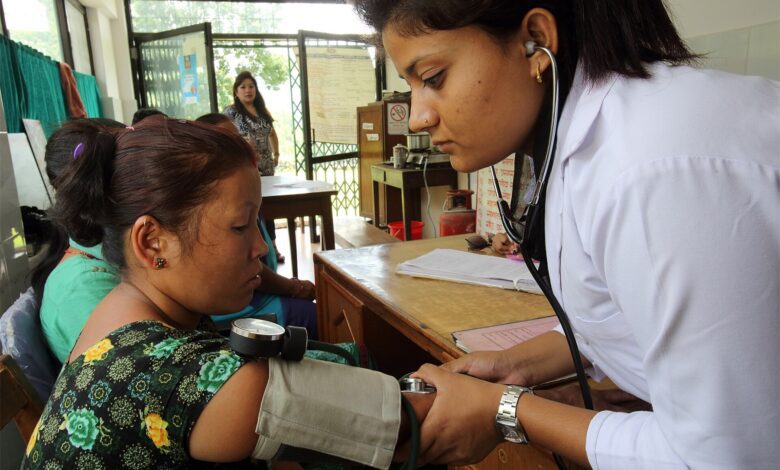
Archive photograph of a health worker at a temporary health post in Pokhara, Nepal. This is not a photograph of the August 2026 flood response. Photo: Australian Department of Foreign Affairs and Trade, Wikimedia Commons, CC BY 4.0.





.jpg)