SEMICON India 2026 preview: dates, agenda and companies expected in Delhi

SEMICON India 2026 is scheduled for September 17–19 at Yashobhoomi, the India International Convention and Expo Centre in Dwarka, New Delhi. The fifth edition is organised jointly by the India Semiconductor Mission and global industry association SEMI under the theme “Silicon to Systems: Building the Ecosystem.”
The Press Information Bureau says Prime Minister Narendra Modi is due to inaugurate the event on September 17. Visitor registration is open through the official conference portal.
What the conference will cover
The three-day programme includes manufacturing technology, chip and product design, equipment and materials, supply chains, artificial intelligence, sustainability, policy, startups, workforce development and international country roundtables.
A “Sand to Silicon to Systems” exhibit is intended to show the stages linking raw materials, fabrication, packaging, electronics design and finished products. That broad scope matters because a semiconductor ecosystem requires more than a fabrication plant: chemicals, gases, tools, packaging, testing, intellectual property, skilled staff and reliable utilities must develop together.
Companies listed for the event
The government announcement names industry participants including ASML, Applied Materials, Teradyne, Infineon, IBM Research, NXP, Tata Electronics, Micron, Lam Research, Tokyo Electron, CG Power, Uno Minda, Advantest, Merck KGaA, Rapidus and several equipment and materials companies.
Appearing on a conference programme does not itself announce a factory, investment or commercial agreement. Any such claim should be tied to a company filing, government approval or formal agreement released during the event.
India’s current semiconductor base
PIB says 12 semiconductor projects were approved under the first Semicon programme. State-of-the-art design tools have been provided to more than 332 academic institutions and 105 startups, while 24 startups have been approved under the Design Linked Incentive scheme.
A separate government factsheet says Semicon 2.0 was approved in July 2026 with an outlay of ₹1,27,500 crore. It identifies six pillars: chip design, equipment and materials, fabrication, advanced packaging, research and development, and talent. Government figures should be tracked against project-level investment, production and employment results rather than treated as completed capacity.
Numbers to watch during SEMICON India
- New projects that receive formal Cabinet or mission approval.
- Factory commissioning and commercial-production dates.
- Domestic value addition rather than total project cost alone.
- Water, electricity and environmental requirements for fabrication.
- Packaging, testing and materials capacity supporting the fabs.
- Training commitments matched with actual technical jobs.
The organisers project that India’s semiconductor requirement could rise from about $100 billion to $200 billion as the global market grows. These are forward-looking industry estimates, not guaranteed demand. The event’s real measure will be whether announcements translate into verified capacity, reliable supply chains and competitive products.
Sources: PIB SEMICON India 2026 programme announcement; PIB semiconductor and AI factsheet.
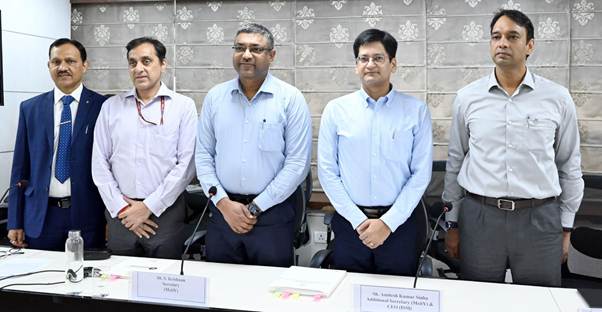
Officials at the conference-programme press briefing. Photo: Press Information Bureau, Government of India.