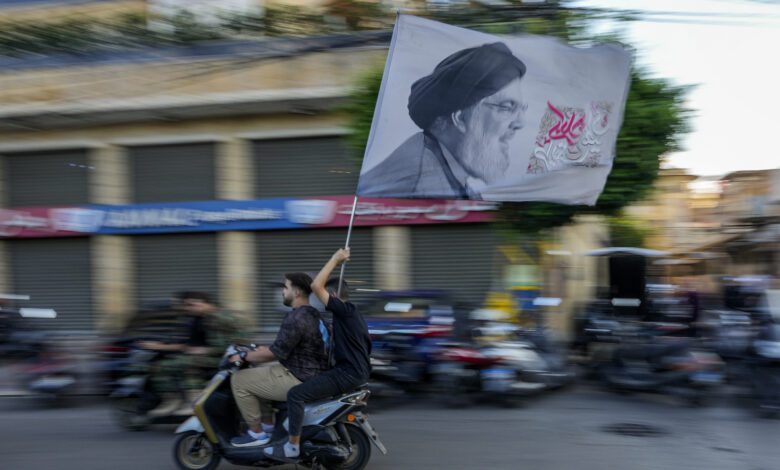
The killing of Hezbollah leader Hassan Nasrallah in an Israeli airstrike on September 27, 2024 disrupted the group’s command at a moment of expanding war. For Canada, the immediate implications involved community safety, terrorist-financing enforcement, travel risk and the danger of treating Lebanese or Muslim Canadians as responsible for an armed organization.
Nasrallah’s death was a major operational shock
Nasrallah had led Hezbollah for more than three decades and combined political authority, military strategy and close relations with Iran. Israel had also killed other senior commanders, while attacks involving communications devices had injured thousands in Lebanon.
That sequence could slow decision-making and expose internal weaknesses. It did not mean Hezbollah had ceased to function: the organization retained fighters, weapons, local structures and a role in Lebanese politics.
Canada has listed Hezbollah since 2002
Canada designates Hezbollah in its entirety as a terrorist entity under the Criminal Code. Knowingly participating in or facilitating the activity of a listed group, including certain forms of financing and material support, can lead to prosecution and asset restrictions.
The legal designation differs from a political opinion about Lebanon or the wider conflict. Authorities still need evidence connecting a person or transaction to prohibited conduct.
Security agencies have examined Canadian support networks
Canadian intelligence and financial authorities have previously reported that Hezbollah used diaspora networks internationally for fundraising and logistical support. A later federal risk assessment also identified Canadian-origin funds in suspicious financial reporting connected to the group.
These assessments establish a reason for targeted investigation, not a licence for collective suspicion. Large Lebanese, Arab and Muslim communities in Canada are diverse and overwhelmingly have no connection to violent activity.
Retaliation risk required proportionate vigilance
A leadership killing can prompt overseas plots, cyber activity, fundraising appeals or intimidation. Police and intelligence agencies therefore had reason to monitor specific threats to Israeli, Jewish, Lebanese, Iranian and other affected communities.
Security measures work best when based on behaviour and credible intelligence. Profiling by ethnicity, religion or political speech can alienate communities whose cooperation is important to preventing violence.
The crisis also affected Canadians in Lebanon
Canada repeatedly advised citizens to leave Lebanon while commercial routes remained available. Escalating strikes, airport uncertainty and road disruption made a later evacuation harder and more dangerous.
Consular planning had to account for dual nationals, children, people with limited mobility and families outside Beirut. It could provide information and coordination but could not guarantee safe movement through an active conflict.
Domestic tension was another foreseeable consequence
Images of civilian deaths in Lebanon and Israel generated grief, anger and protest in Canada. Political disagreement is protected expression, but threats, harassment, hate crimes and support for violence are not.
Public officials had a responsibility to condemn antisemitism, anti-Muslim hatred and anti-Arab racism consistently. Selective concern can deepen the polarization it claims to address.
“Disarray” did not provide a reliable forecast
Removing senior leaders can degrade an armed group, but it can also produce decentralized retaliation or elevate harder-line commanders. Hezbollah continued firing projectiles, and Israel soon began ground operations in southern Lebanon.
A United States- and France-backed cessation eventually took effect in November 2024. The intervening destruction showed why an intelligence judgment about organizational weakness should not be confused with proof that the war was ending.
Canada’s response needed law, safety and restraint
The appropriate Canadian response was to enforce financing and security laws, protect communities, assist citizens abroad and support diplomacy and humanitarian access. Each task required verifiable evidence and equal protection.
Nasrallah’s death mattered to Canada because conflicts and financial networks cross borders. It did not justify importing collective blame. Effective policy targets illegal conduct while preserving the rights and safety of Canadians with personal ties to the region.