Parker Solar Probe Checks In After Its 29th Close Pass of the Sun

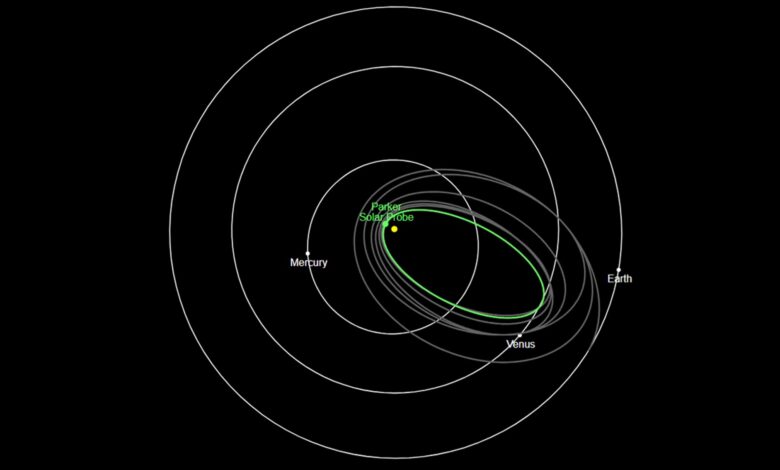
NASA’s Parker Solar Probe has checked in after its 29th close approach to the Sun, completing another pass through an environment that no previous spacecraft has explored so closely.
The spacecraft made the approach on 4 September, passing about 3.8 million miles from the solar surface and travelling at roughly 430,000 miles an hour. NASA received a normal status beacon on 7 September, an important confirmation that the spacecraft remained healthy after the encounter.
Why these close passes matter
Parker Solar Probe is designed to study the outer solar atmosphere, known as the corona, and the processes that drive the solar wind. Those processes affect space weather, which can influence satellite operations, communications, navigation systems and power infrastructure on Earth.
The mission is not trying to predict every solar storm by itself. Its measurements help scientists test how the Sun accelerates particles and transfers energy into space, improving the physical understanding behind broader space-weather research.
Data will arrive after the encounter
A status signal is only a small part of the mission return. NASA says the full science data from this pass is scheduled to be transmitted between 13 and 27 September. That delay is normal: a spacecraft operating close to the Sun must manage heat, power, orientation and communication opportunities carefully.
Scientists will combine the new readings with data from earlier passes and from other solar-observing missions. The value is cumulative, because repeated close approaches allow researchers to compare different conditions in the corona and solar wind.
Mission timeline
NASA says Parker Solar Probe’s mission has been extended into 2029. That gives the mission more time to build a record of observations across changing solar conditions and to answer questions that cannot be resolved from a single close pass.